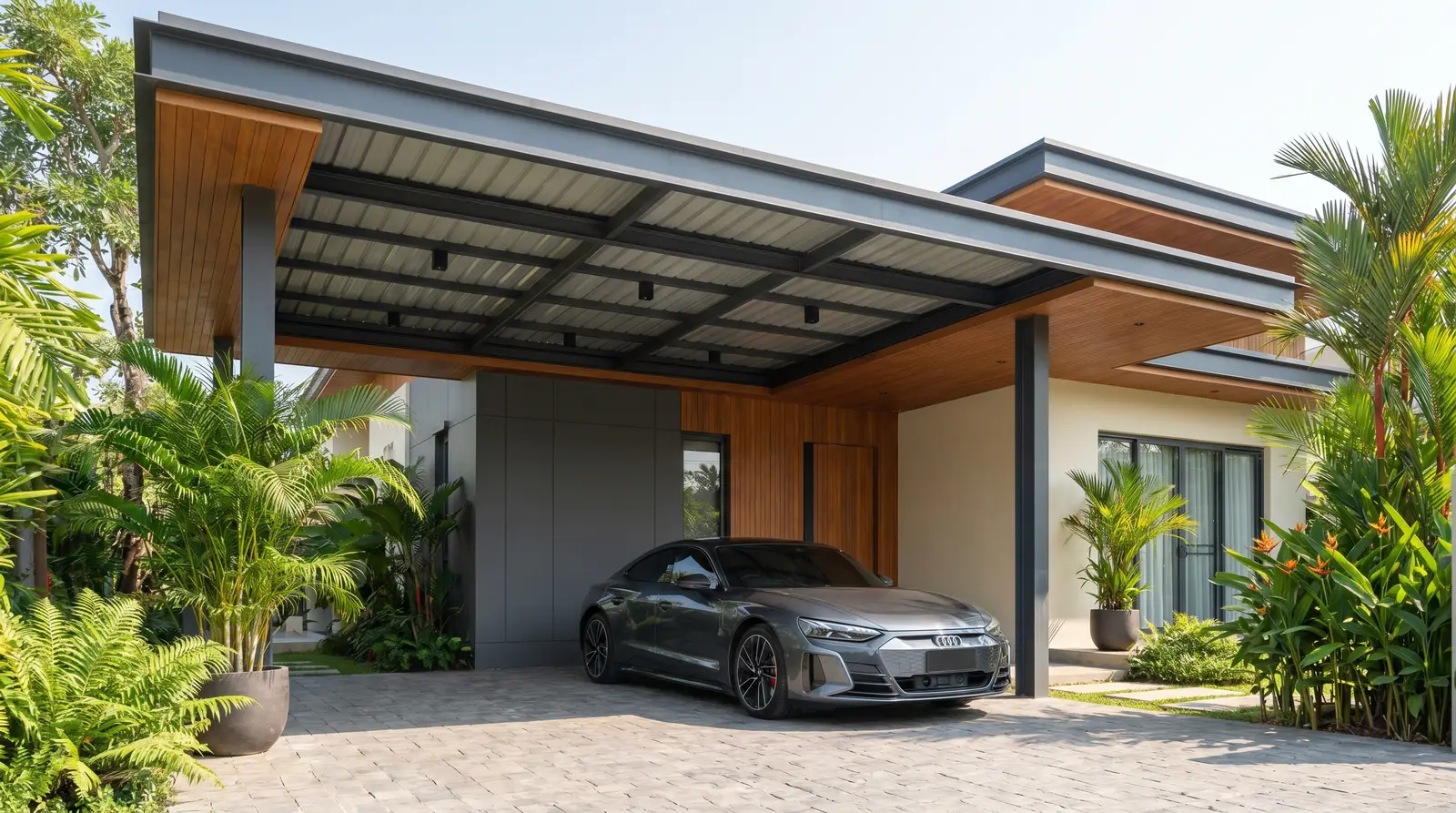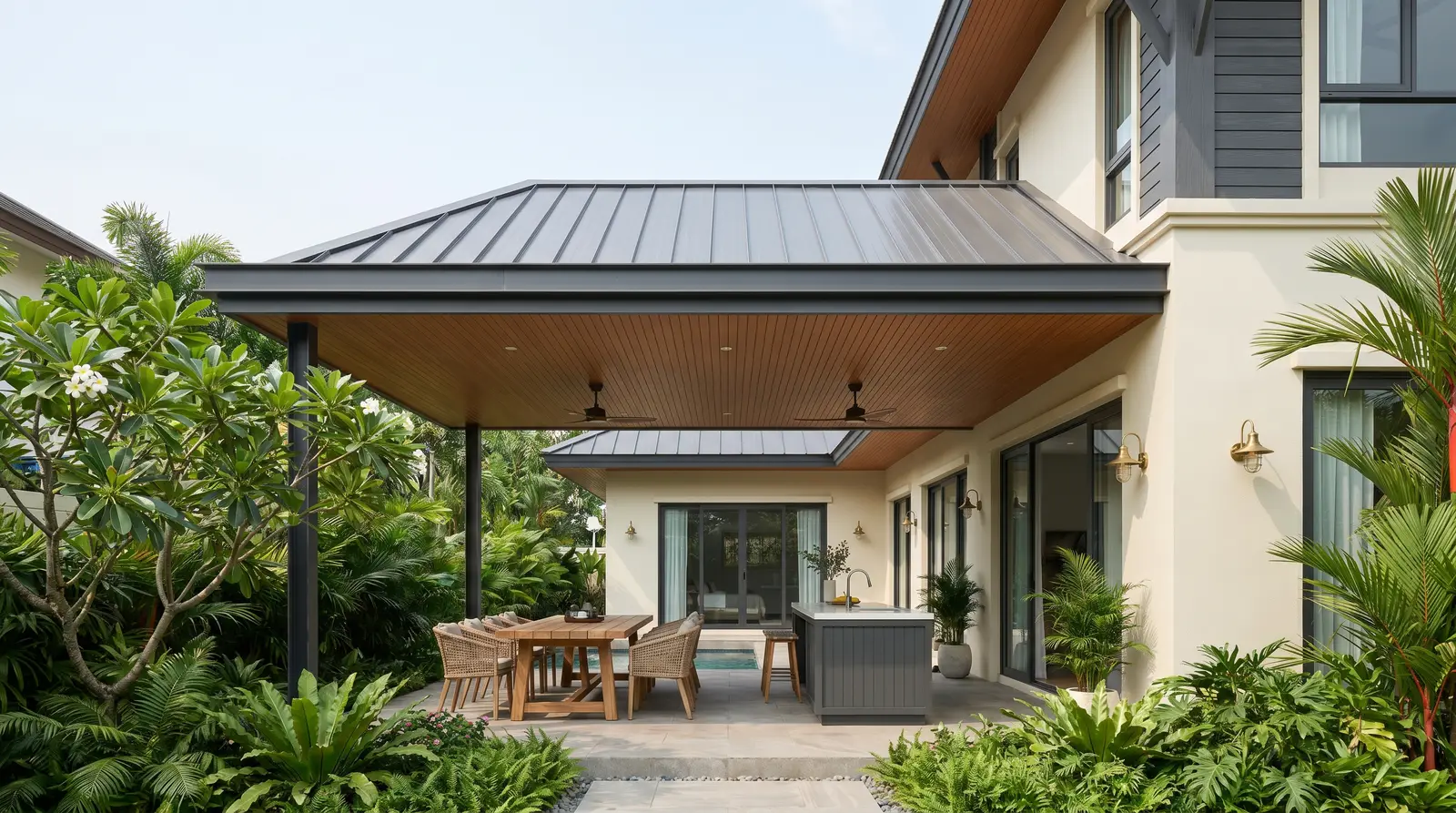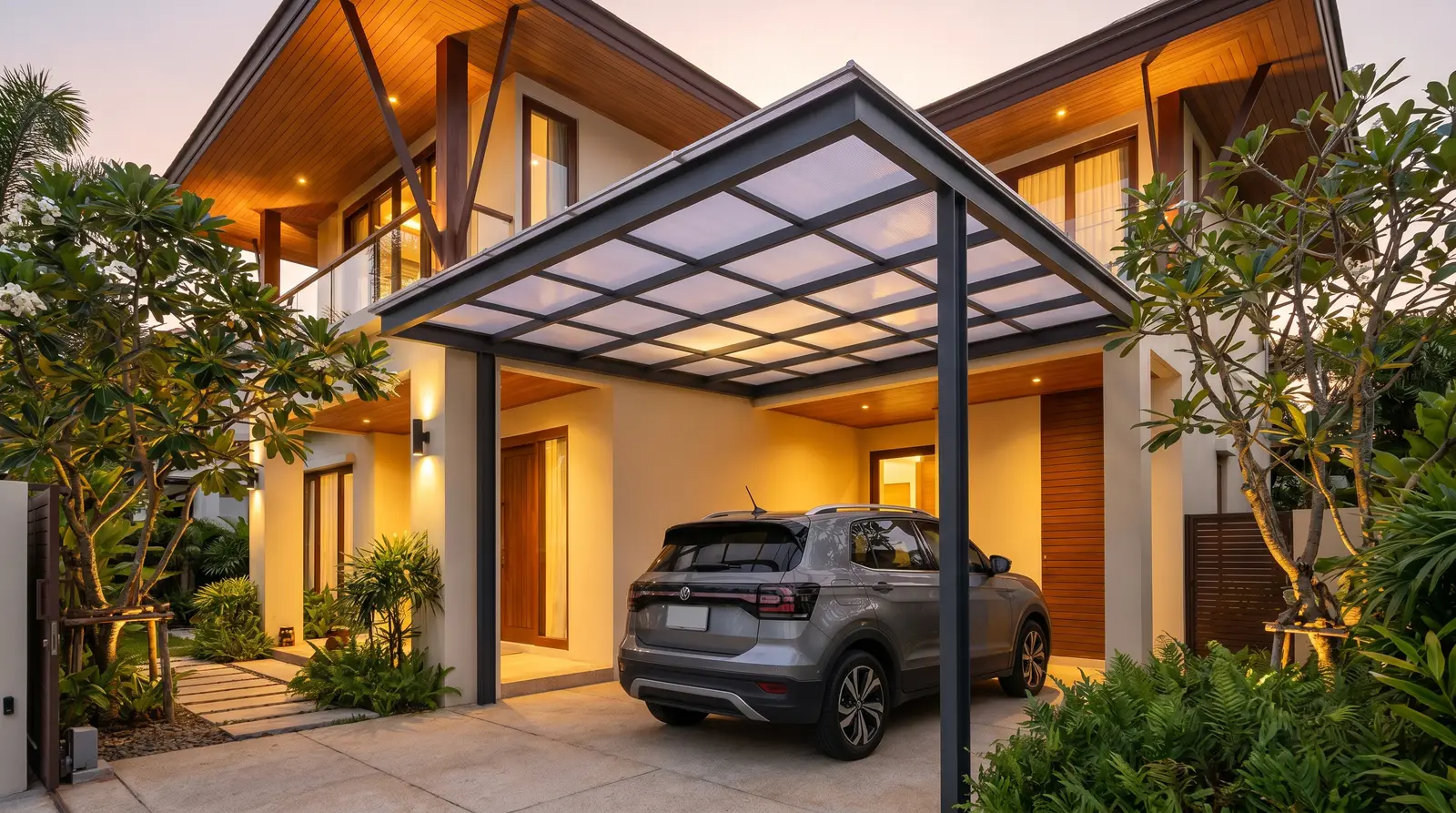
Two searches always travel together: “budget carport roof” and “carport installation price”. Everyone wants real shelter from sun and rain without the cost running away. This guide breaks the price into its parts, shows where you can genuinely save without weakening the structure, flags what must never be cut, and explains how to compare quotes so the differences become obvious.
What makes up the price
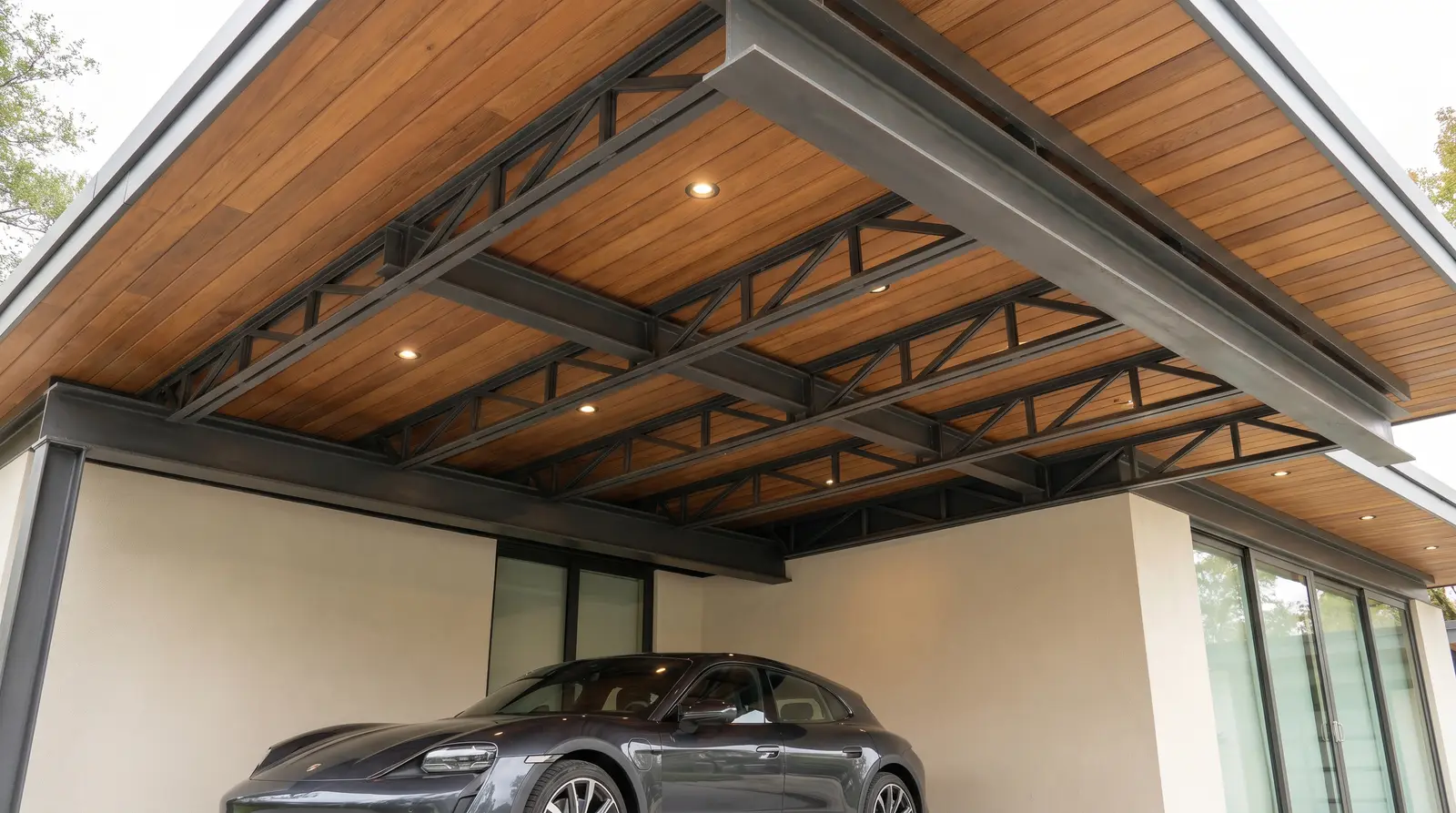
Five parts: the steel frame (columns, beams, purlins), roof sheeting, paint and rust protection, installation labour, and footings. The frame is usually the largest share, then sheeting. Cheaper-looking quotes often trim rust protection and footings — the two things you cannot see at handover but that decide how long it lasts.
Where you can genuinely save
Pick a mono-pitch instead of a gable and you save steel and labour. Shorten the span by adding one column where it does not block parking, and lighter sections become possible. Choose thinner insulated sheet if the car is only parked overnight. Size the structure to the actual vehicles rather than adding spare area.
What you must not cut
Three things: footings and column fixing, because carports take serious wind uplift and shallow footings are a real risk; rust protection, meaning galvanised steel or two coats of primer before topcoat; and welds and finishing, because unground, unpainted welds are always where rust starts.
Comparing quotes properly
Ask every contractor to state section sizes and steel thickness, column count and positions, sheeting type and thickness, the rust-protection system, footing details and the warranty period. When two quotes differ by 20–30%, it is rarely margin — it is usually steel sections or corrosion protection. A line-by-line comparison exposes it immediately.
Budget against common sizes
A single carport around 3x5 m is the most efficient per usable square metre. Two cars at 6x5 m raise the question of the middle span. On a tight budget, two bays with one central column placed clear of the car doors is markedly cheaper than a single wide span.
Extend later or build once
If more cars or more area are likely, design for extension from the start — position columns and leave beam connection points. Demolishing to extend later usually costs far more than allowing for it up front, and repainting the whole structure is a cost people forget.