A carport roof protects your car from sun, rain and bird droppings while keeping the property tidy and adding value. Yet many owners hesitate over which design and material give the best value. This guide covers the popular carport roof designs — gable, lean-to (single slope), flat and curved — along with roofing materials such as metal sheet, insulated sheet and polycarbonate, plus the steel structure, footings, span and height suited to your vehicles, sun and heat control, drainage, and how budget builds compare with premium ones. NexSteel Solutions designs and installs carport roofs across Samut Prakan and Chonburi, focusing on a strong frame, clean detailing and leak-free finish. The aim is to help you choose a carport roof that genuinely fits your home and budget rather than overspending or settling for too little.
Carport Roof Designs Compared
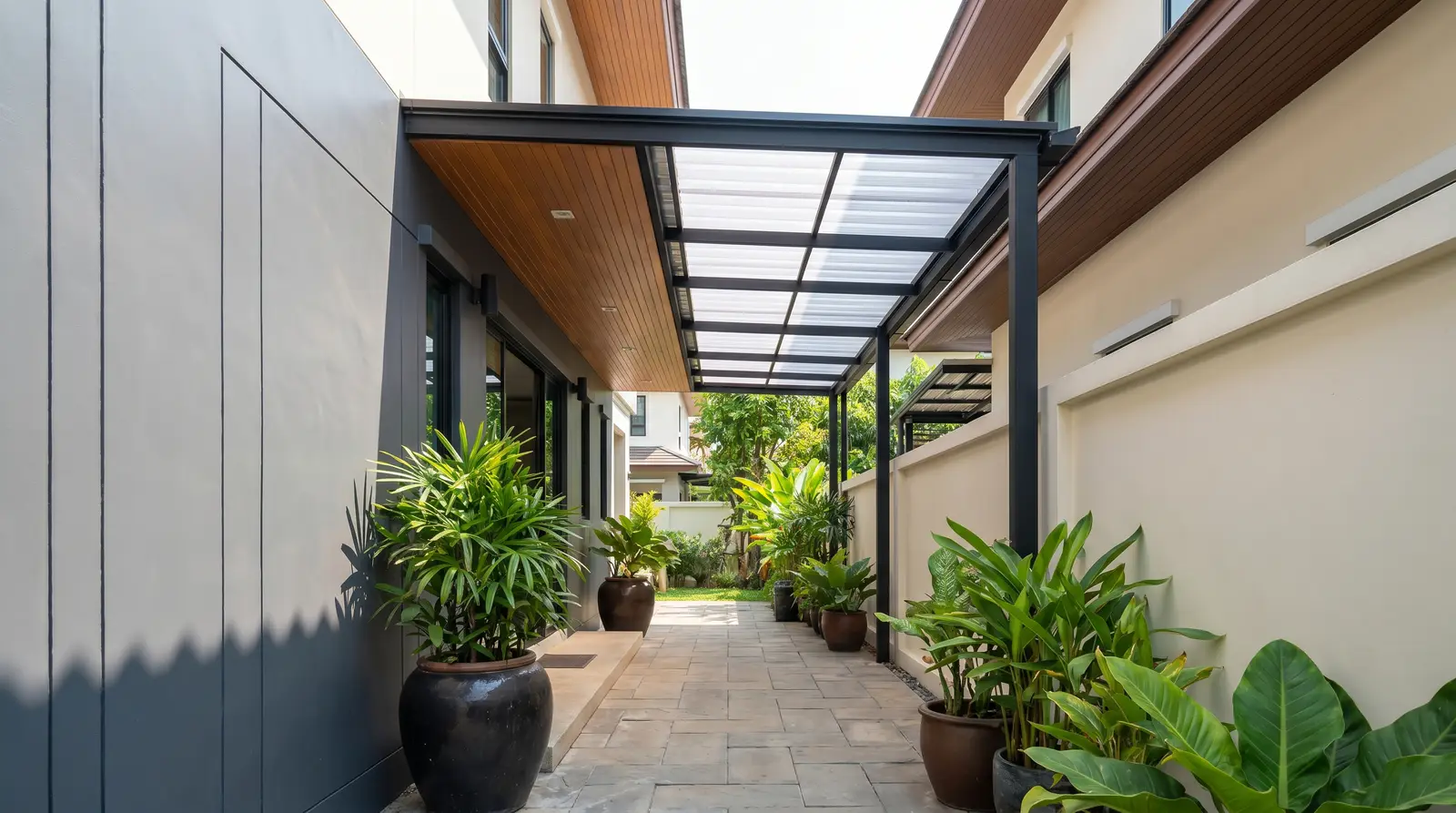
A gable roof sheds heat and water well, looks formal and suits wide spans. A lean-to or single-slope roof is simple, economical and easy to install — ideal set against a house wall. A flat roof looks modern but needs a controlled slope so water never pools. A curved roof gives a sleek, contemporary look, reduces dead corners and lets water run off smoothly. Choose the shape to fit your space, house style and budget.
Roofing Materials for the Job
Metal sheet is popular because it is strong, good value and quick to install, though it gets hot without insulation. PU-insulated sheet cuts heat and rain noise well, suiting carports used for long periods. Polycarbonate lets light through and blocks UV, and pairs nicely with metal sheet to add brightness. Pick based on heat, the light you want underneath, and the budget you have to work with.
Steel Structure, Footings and Stability
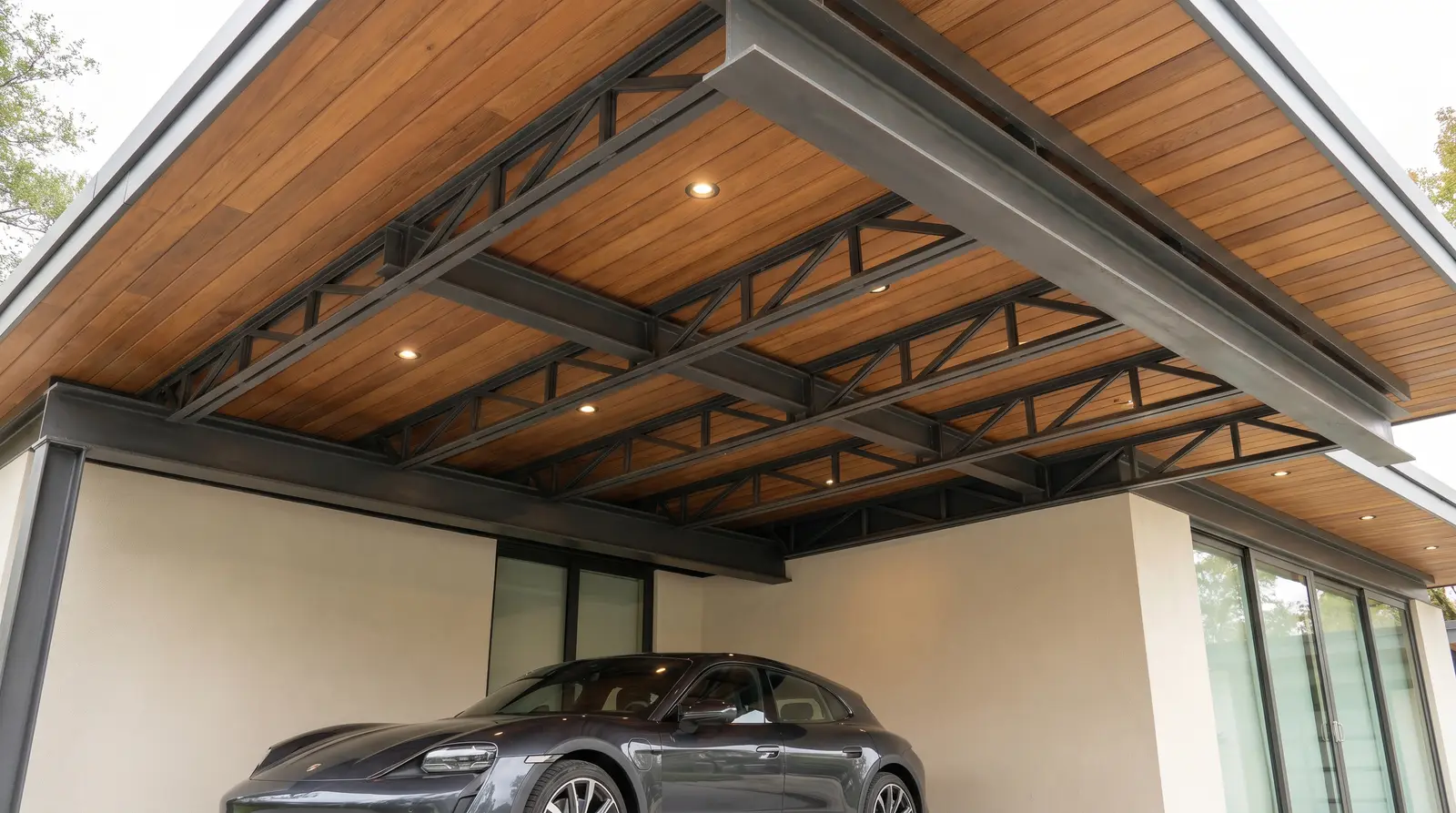
A durable carport roof needs correctly sized, anti-rust coated steel posts and beams on solid footings. Posts are set into cast concrete anchored to the ground so the frame resists wind and carries the roof load. Post and purlin spacing must be calculated to the span and sheet type; a post-free carport calls for stronger beams. Good footing work is the foundation of a structure that stays safe for years.
Span and Height for Your Vehicles
A single-car carport should allow width to open doors easily, and a two-car layout needs clearance between vehicles and a walking path. Clearance under the roof should suit a typical car, with extra height for a raised pickup or van. Measuring the real space and working out these dimensions from the start makes the carport convenient to use and avoids costly changes later.
Sun, Heat Control and Drainage
Thailand’s sun is intense, so an insulated sheet — or insulation added beneath metal sheet — reduces heat building up under the roof and keeps the car and the area cooler. For drainage, the slope must be calculated so water runs quickly into the gutter, with gutters and downpipes sized to the area to prevent pooling and stop rain blowing onto the house wall or carport floor.
Budget vs Premium, and Care
A budget build is usually bare metal sheet on a standard steel frame — good value and perfectly serviceable. A premium build uses insulated sheet, heavier steel, finer detailing, and extras like a ceiling or lighting, making it cooler and more attractive. Upkeep is easy: wash dust off the sheet and out of the gutter, and check fixings and sealant once a year to extend the roof’s life considerably.