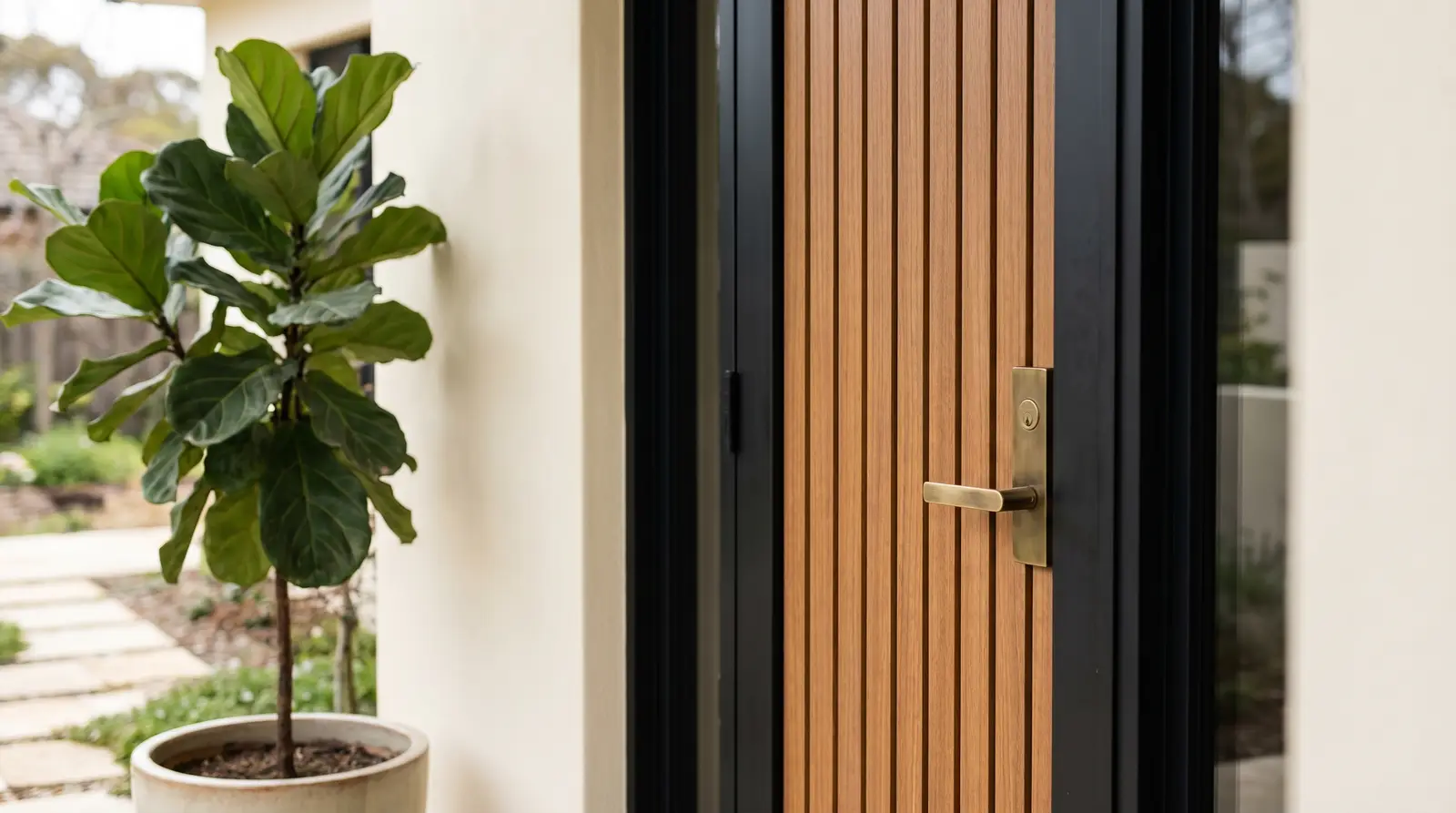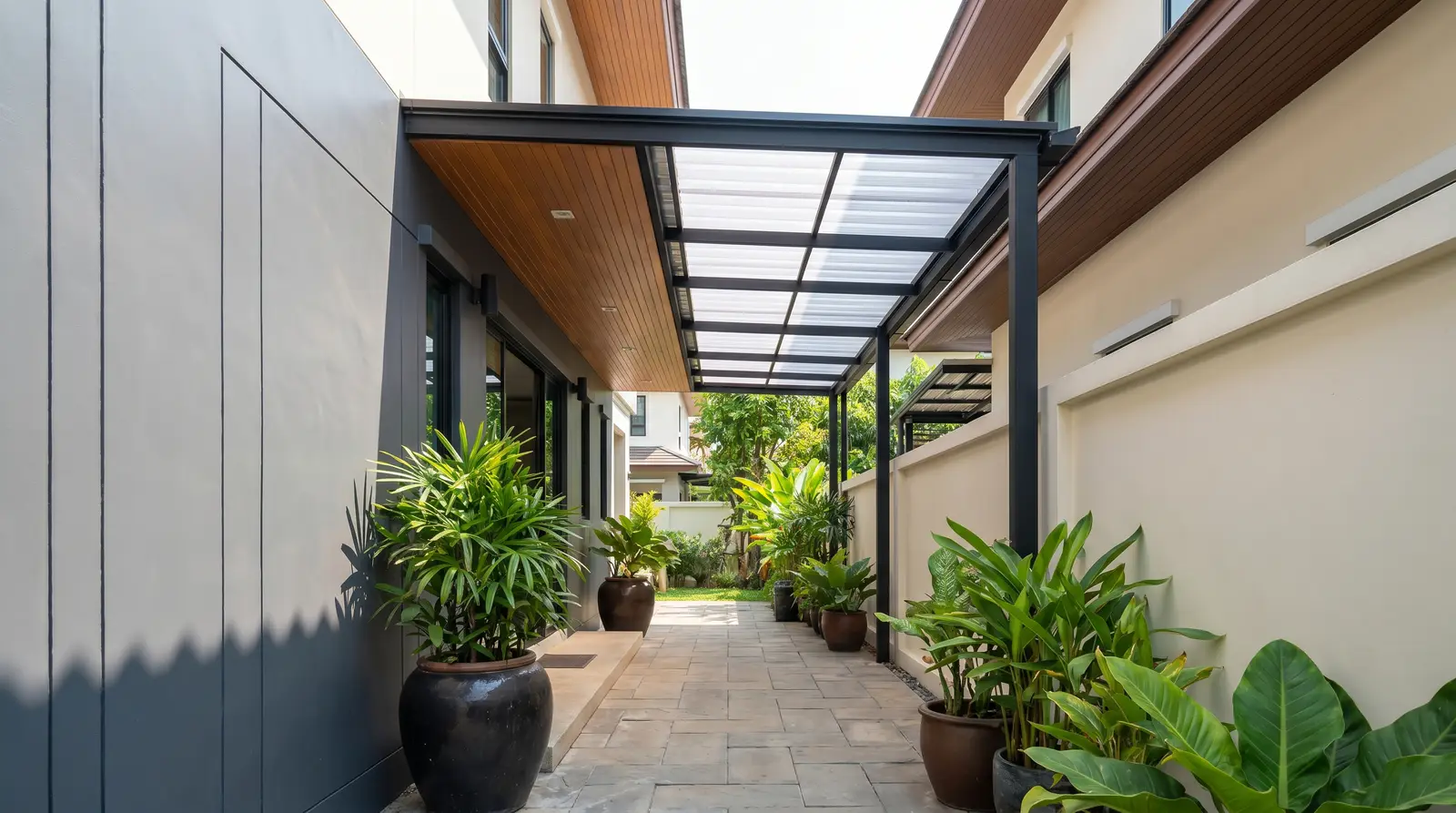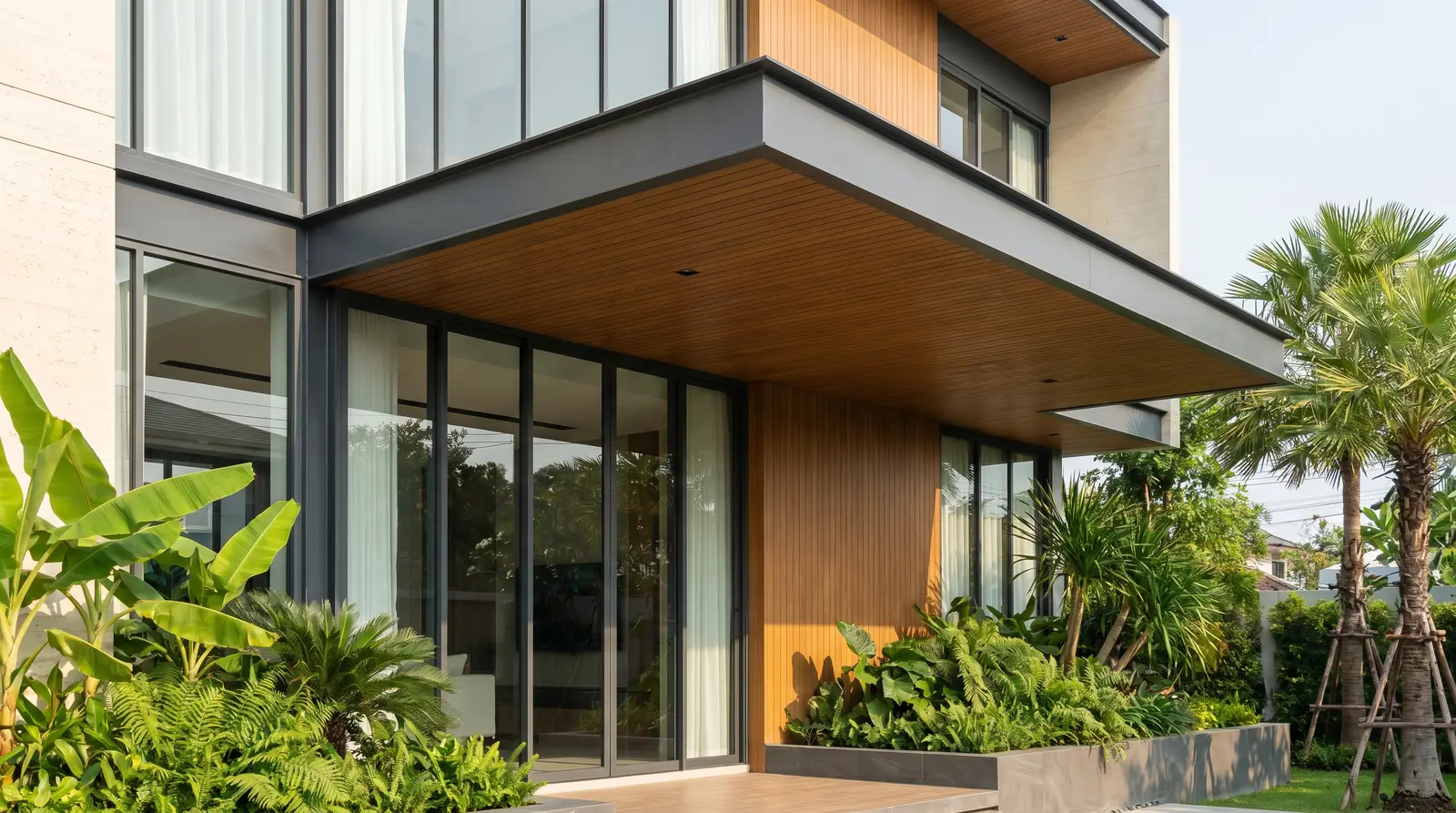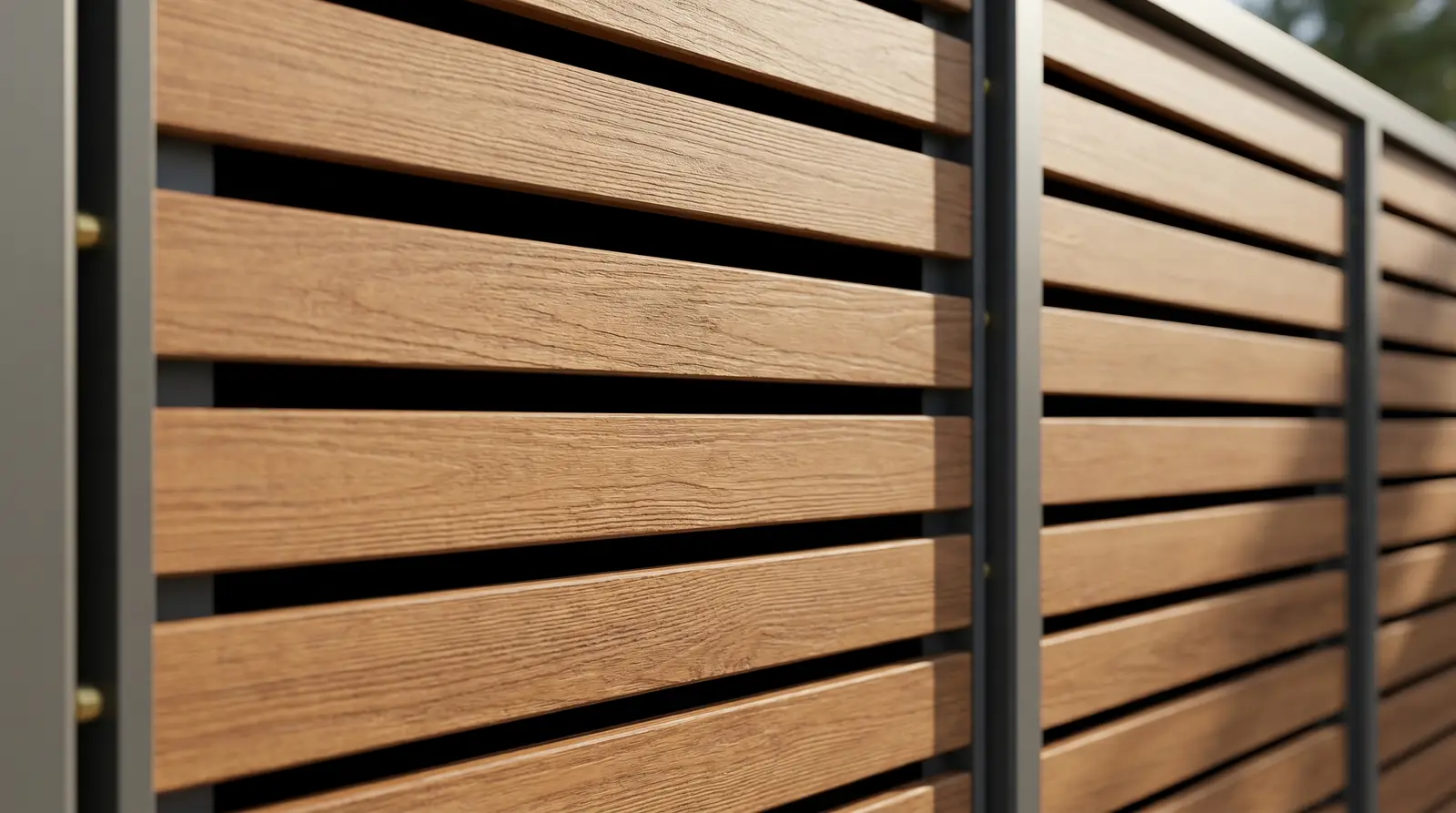
WPC battens are one of the fastest-growing exterior finishes in Thailand right now, offering the grain and feel of real timber with far better resistance to sun and rain. Each batten is extruded from wood fibre blended with PVC, so it will not rot, swell or feed termites — ideal for privacy screens, decorative wall cladding, fences, eaves soffits and commercial facades. This guide walks you through WPC battens from the ground up: what the material is made of, where it works best, how it compares with real wood, how to choose the right profile and spacing, how it is installed on a steel sub-frame, and how to care for it — so you can pick battens that look great and last for years.
What WPC battens are and what they are made of
WPC stands for Wood Plastic Composite — wood fibre or wood flour blended with PVC and additives, then extruded into batten profiles. The mix combines the warmth of timber with the durability of plastic, giving you battens that feel like wood yet shrug off moisture. The result is a strong, low-absorption material that holds its shape well in Thailand’s hot, humid climate.
Where WPC battens are used
WPC battens are versatile. The most popular use is privacy screens that block sightlines from neighbours or the street. They also serve as decorative wall cladding that adds depth and a modern look, fence and gate infill, eaves and under-awning soffits, and facades for offices and shops. They mount vertically or horizontally, with spacing set tighter for screening or wider for an open, airy feel.
Pros and limits versus real wood
The upsides: WPC will not rot or swell, termites cannot eat it, and it never needs repainting or re-sealing. Quality grades include UV inhibitors so colour fades slowly, and cleaning is just a wipe-down. The limits: the price per length is higher than ordinary softwood, and the shade may shift slightly over the years. Once you factor in lifetime maintenance, though, WPC is usually the better value.
Choosing the right profile and spacing
Match the profile to the job. Solid round or square sections suit privacy screens that need strength, while lighter hollow profiles work well for soffits and walls. For spacing, narrow gaps give more screening, while wider gaps let in light and air. Pick a thickness in proportion to your frame spacing so the battens do not sag or bow over time.
Installing battens on a steel sub-frame
Durable WPC work starts with a solid frame. Most installs use galvanised or anti-rust steel box sections, with rail spacing matched to the batten length to prevent sagging and twisting. Battens are fixed with stainless screws or clip systems depending on the model, with small expansion gaps left in place, and end caps fitted to finish neatly and keep water out.
Cost factors and maintenance
Pricing depends on the area, profile and thickness, batten spacing, height, and structural complexity. Maintenance is easy: rinse or wipe off dust and grime occasionally and avoid scraping with sharp tools. For spots in strong direct sun, choose a UV-stabilised grade from the start to keep the colour looking fresh for longer.