Roof extensions are one of the most popular home upgrades in Thailand, because they add sheltered, weatherproof space without rebuilding the whole house. Whether it is a front roof extension for parking and sitting out, a rear extension for a kitchen or laundry, or a side extension for extra storage, a good roof extension needs the design, materials, structure and legal side all planned together. This guide answers the key questions: which roof extension style is best, how to choose roofing materials that cut heat and last, what permits and setbacks you need, and how to plan the budget — so your extension is worth the money and free of problems down the line.
What a roof extension is and where you can add one
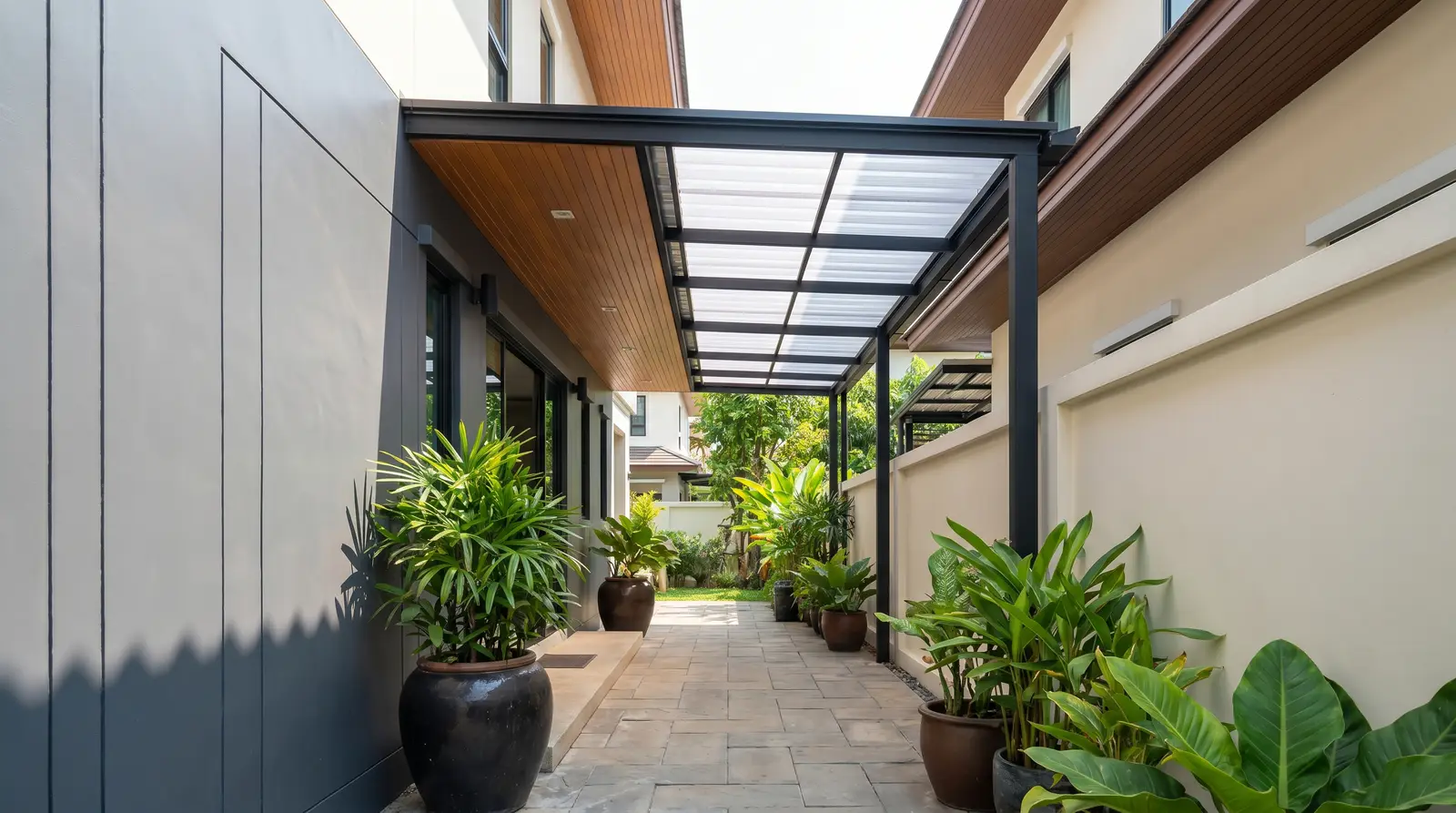
A roof extension means extending a covered roof out from the existing house to gain extra usable space. The most popular spot is a front roof extension for parking, sitting out or a multi-purpose terrace. Rear extensions are often used for a Thai kitchen, a laundry area or an open-plan back kitchen. Side extensions suit a walkway, a storeroom or a narrow strip of usable space. Choose where to extend based on sun and rain direction, how you will actually use it, and the free space around the house.
Popular roof extension shapes
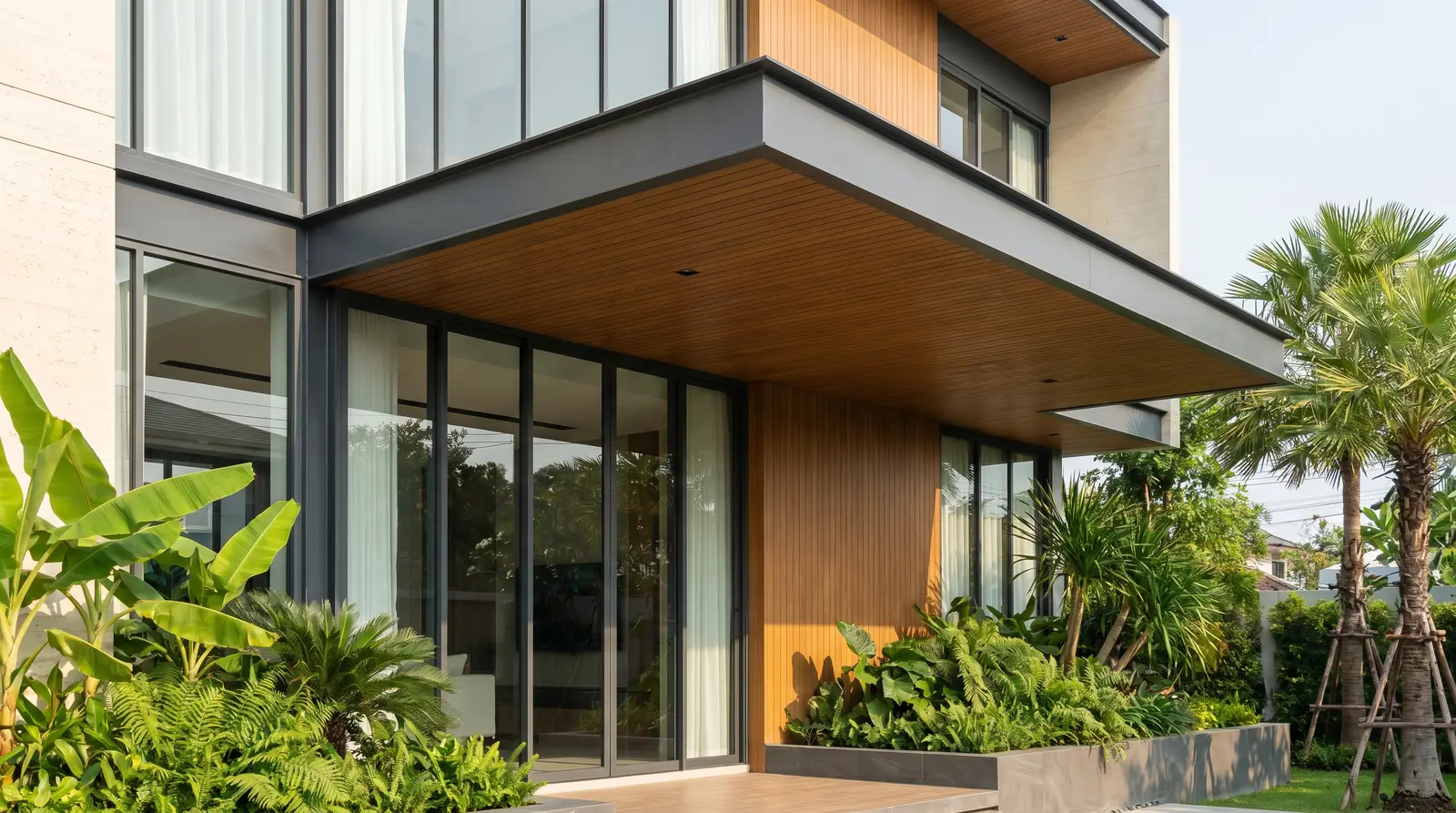
Extension roofs come in several shapes to match the house. A mono-pitch (lean-to) or sloped roof is easy to build and drains well, suiting most homes. An open, translucent roof keeps a front terrace bright while still blocking rain. A solid roof maximises heat and sun protection for kitchens and parking. Modern homes often prefer a flat, low-slope roof for clean lines. Pick a shape that ties in with the existing house roof so the overall look stays coherent.
Choosing roofing material and structure
There are many roofing materials for extensions. Metal sheet is light, fast to install, affordable and can take added insulation. Translucent polycarbonate sheet lets light through and suits front terraces. Vinyl and prefab awning panels look neat and resist heat well. For structure, most builds use galvanised or anti-rust steel box sections because they are strong and quick to work with. Design the column spacing and slope to match the span and to drain rainwater properly.
Which roof extension is best for your use and budget
A common question is which front roof extension is best — and the answer depends on use and budget. For shaded parking on a tight budget, insulated metal sheet is the best value. For a brighter terrace, mix in some translucent panels. For long-term looks and tidiness, choose vinyl roofing or add a ceiling under the roof. Budget should allow for the structure, roofing material, the drainage system, and anti-rust paint finishing.
Permits, setbacks and the legal side
Roof extensions and home extensions come with rules worth knowing. Work that changes the structure or adds building area usually requires a building-modification permit from the local authority, and you must keep the legal setback from the boundary line so as not to affect neighbours and drainage. Consult an experienced contractor from the planning stage so the design meets the requirements, reducing the risk of structural settlement and future disputes with neighbours.
Cost factors and budget planning
Roof-extension pricing depends on the floor area, roofing material, the height and complexity of the structure, the foundation and anti-settlement system, plus finishing such as ceilings, gutters and tying into the existing roof. Work that needs extra piling to prevent settlement costs more than a light extension. Good budgeting means an on-site measurement and a quote against the design, so you get strong, good-value work that does not overrun.