“Which roof extension is best?” is one of the most searched questions before any Thai home extension, because getting the type wrong leads to leaks, trapped heat and cracks where the new work meets the house. This guide compares six popular extension types — front, rear and side — with their trade-offs, and covers the single most important principle: keeping the extension structurally separate from the original house.
Settlement comes first
The existing house has already settled; a new extension will settle on its own schedule. Tie the two rigidly together and cracks will appear at the junction. The correct approach is separate footings and a flexible expansion joint, closed with a cover strip that can move. This applies to every type below.
Type 1 — mono-pitch off the wall
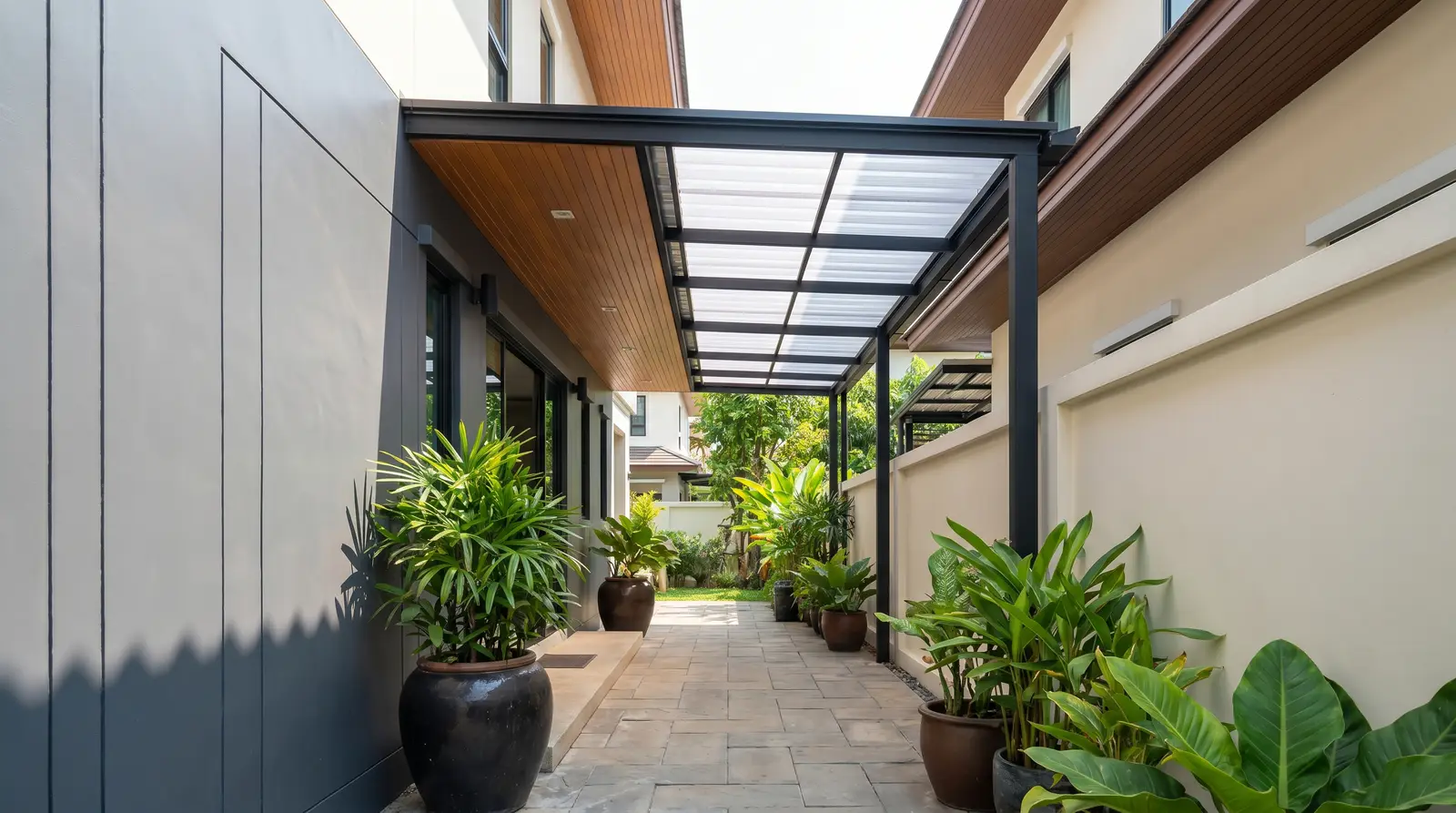
The most popular option: simple, good value and drains well, ideal beside or behind the house where space is tight. Watch the pitch — too shallow and water lingers and stains. Fit a proper gutter and downpipe, especially where the boundary is close, since water must not discharge onto a neighbour’s land.
Type 2 — flat modern roof at the front
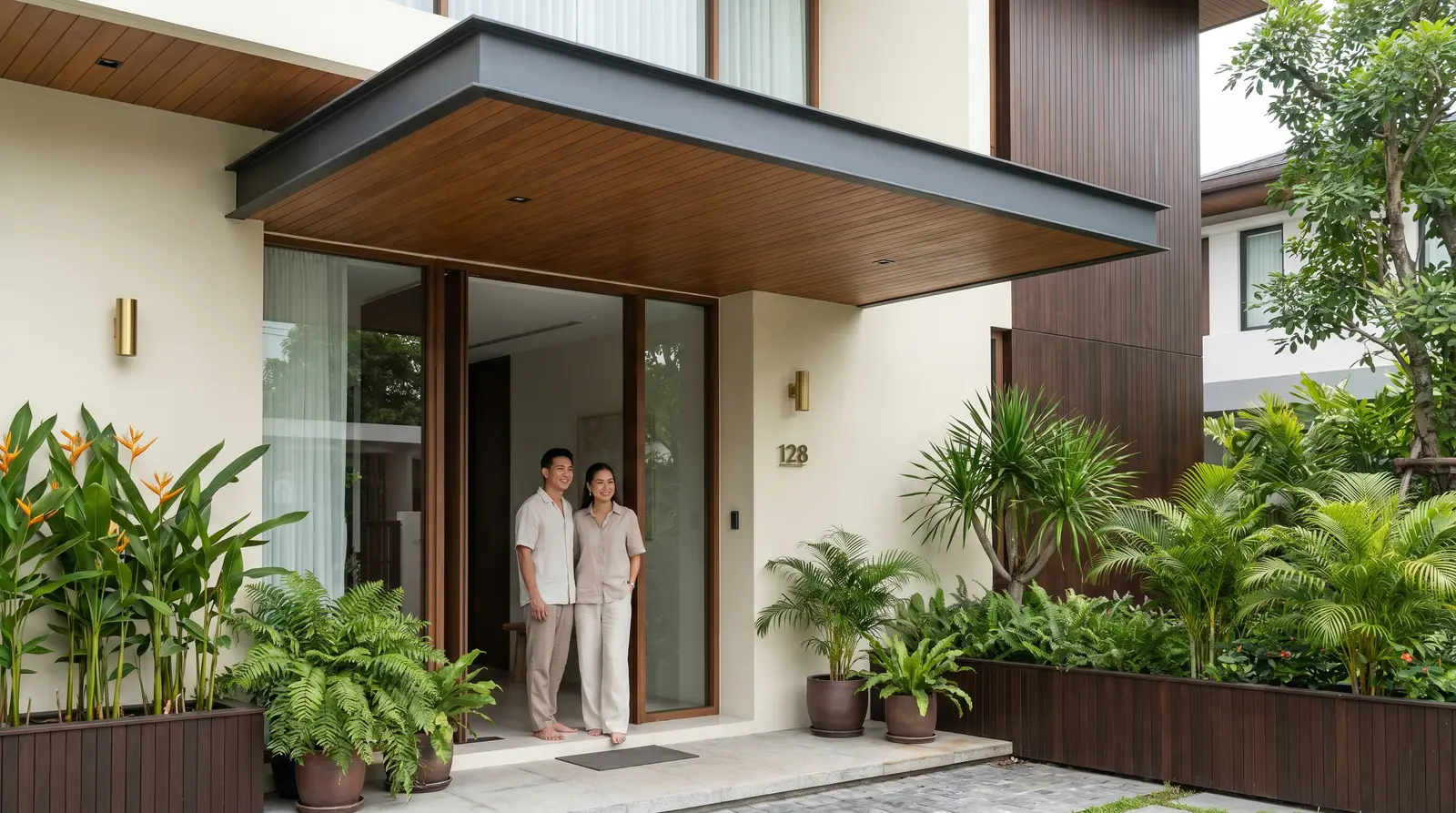
Clean and contemporary, matching boxy houses, and popular for front parking or an entrance porch. It blends well with newer homes, but the concealed fall and gutter work must be precise: a flat roof is the type most likely to leak if the detailing is sloppy.
Type 3 — gable to match the house
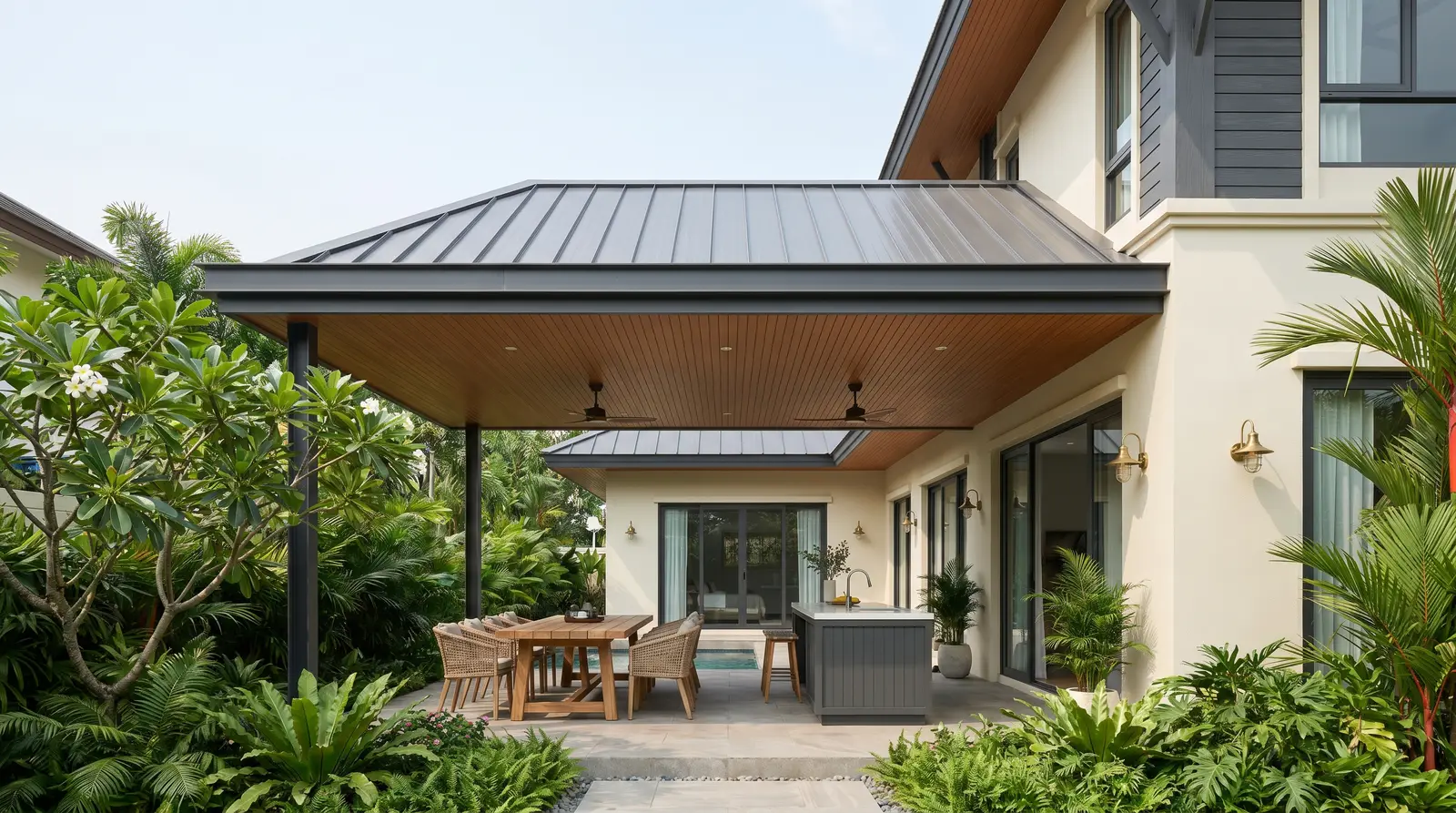
Best where the house has a gabled roof and the extension should read as original. It vents heat well and can use matching tiles. The downside is more structure and a higher price, so it suits kitchen or family-room extensions where long-term appearance matters.
Types 4–6 — cantilever awning, pergola and mixed roofing
A post-free cantilever suits narrow frontages where columns would be in the way. An open batten pergola suits seating areas that want shade without enclosure. Mixed roofing — mainly metal sheet with translucent panels inserted — is the usual answer when people worry the extension will darken the house.
Choosing for your house
For value and drainage, mono-pitch. For a modern match, flat — but only with a meticulous installer. To blend with a traditional roof, gable. For very tight frontages or no columns, a cantilever awning. Whichever you choose, insist on separate footings and a flexible joint.