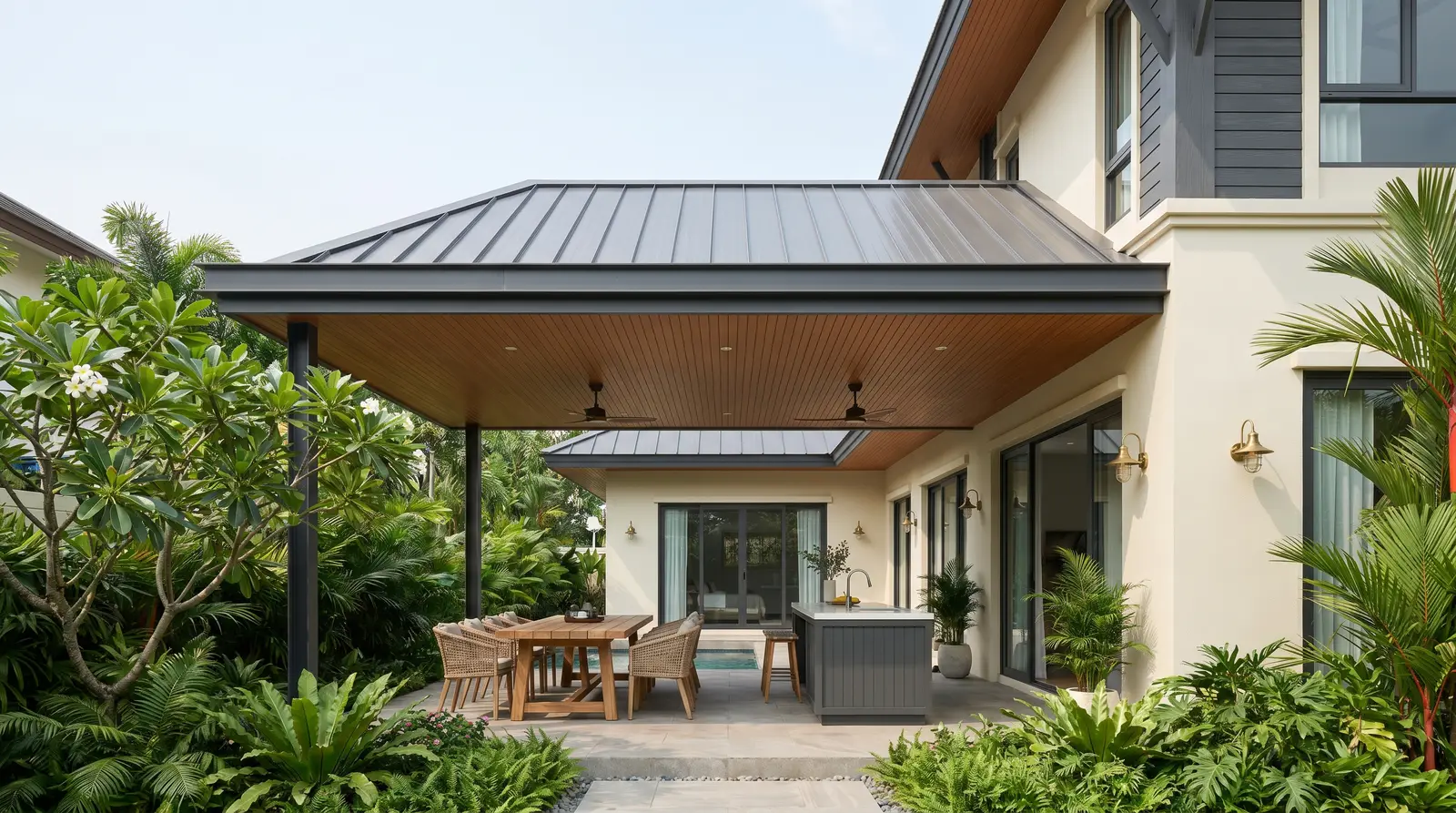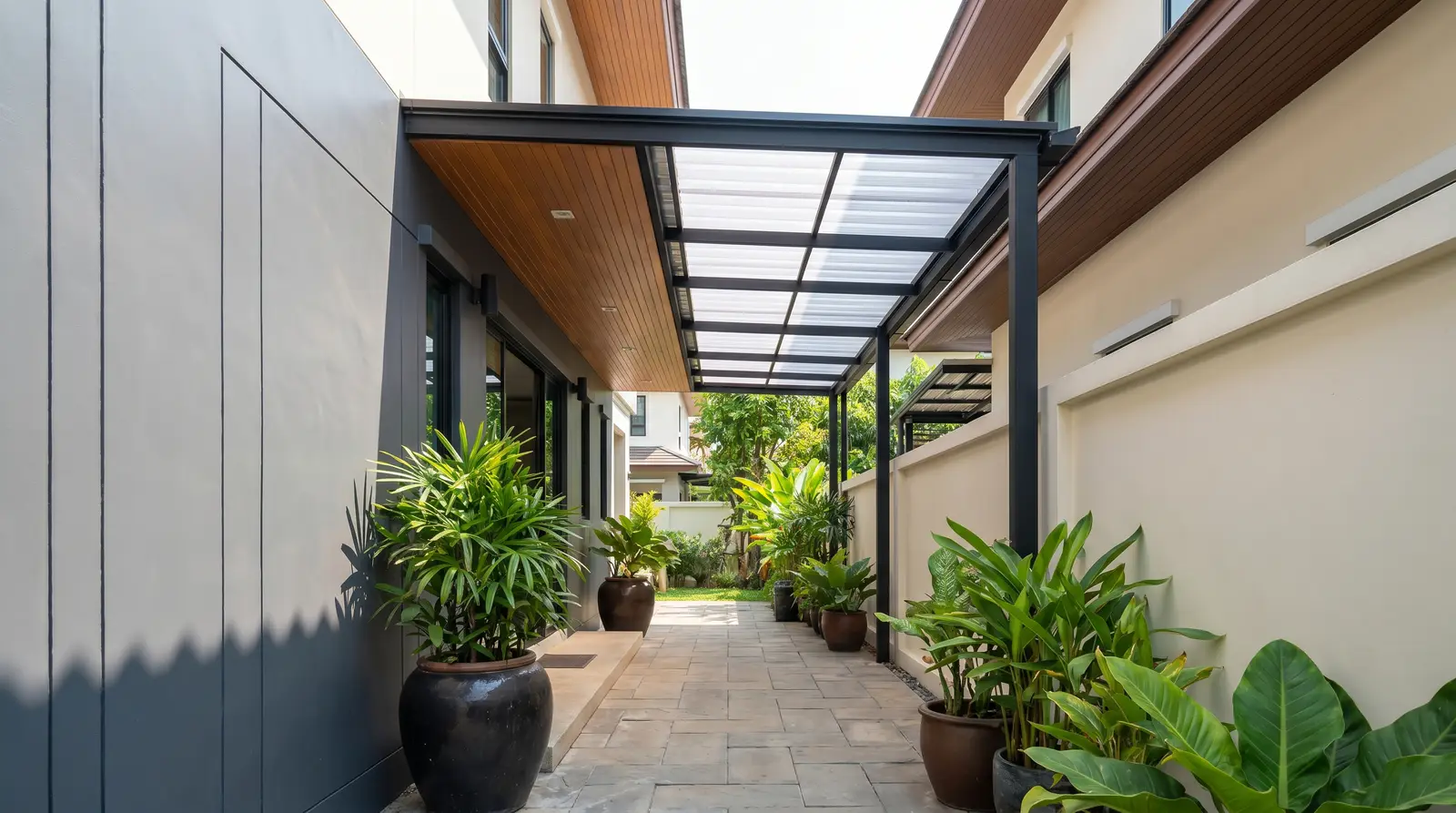
Research a roof extension and you meet a wall of material names — metal sheet, vinyl, polycarbonate, acrylic and various translucent panels — with prices that differ several times over and very different best uses. This guide compares the roofing materials actually used on Thai extensions across heat, rain noise, lifespan and relative cost, so you choose by how the space is used rather than by the most familiar name.
Metal sheet — the standard value choice
Metal sheet is the most used material on extensions: light, fast to install and affordable. Its weaknesses are heat and rain noise when used bare. The fix is a PU- or PE-insulated version, which addresses both. On a tight budget, at least choose adequate gauge and leave room to add insulation underneath later.
Vinyl roofing — cooler and quieter
Vinyl panels conduct less heat and cut rain noise markedly better than bare metal sheet, and they cannot rust, which suits coastal areas. The trade-offs are a higher price and strict purlin spacing from the manufacturer — space the purlins too far apart and the panels sag, so use an installer familiar with the system.
Polycarbonate and acrylic — where you need daylight
If you are worried the extension will darken the house, translucent sheeting is the answer. Polycarbonate is cheaper, can be curved and takes impact well. Acrylic is clearer, looks better and yellows more slowly, at a clearly higher price. Choose UV-protected grades in both cases, and remember that light always brings heat.
Roof tiles — matching the original house
For a gabled extension that should look original, concrete or profiled tiles blend best. They insulate better than bare metal sheet and match the main roof. They are heavy, though, so the frame must be designed for the load and structural cost rises — which rules them out for cantilevers and very wide spans.
Heat, noise and lifespan compared
For heat: tiles and thick insulated sheet lead, then vinyl, then thin insulated sheet, then translucent panels. For rain noise: vinyl and thick insulation are quietest, bare metal loudest. For lifespan: quality coated steel and vinyl last well, while translucent sheeting usually degrades first under direct UV.
Choosing sensibly
Ask three questions. What is the space for — a kitchen or seating area needs heat and noise control, a walkway or laundry can take the economical option. Which way does the sun hit — full afternoon sun means more insulation. Are you near the coast — if so avoid rust-prone materials and specify stainless fixings. Those three answers usually point straight to the right material.