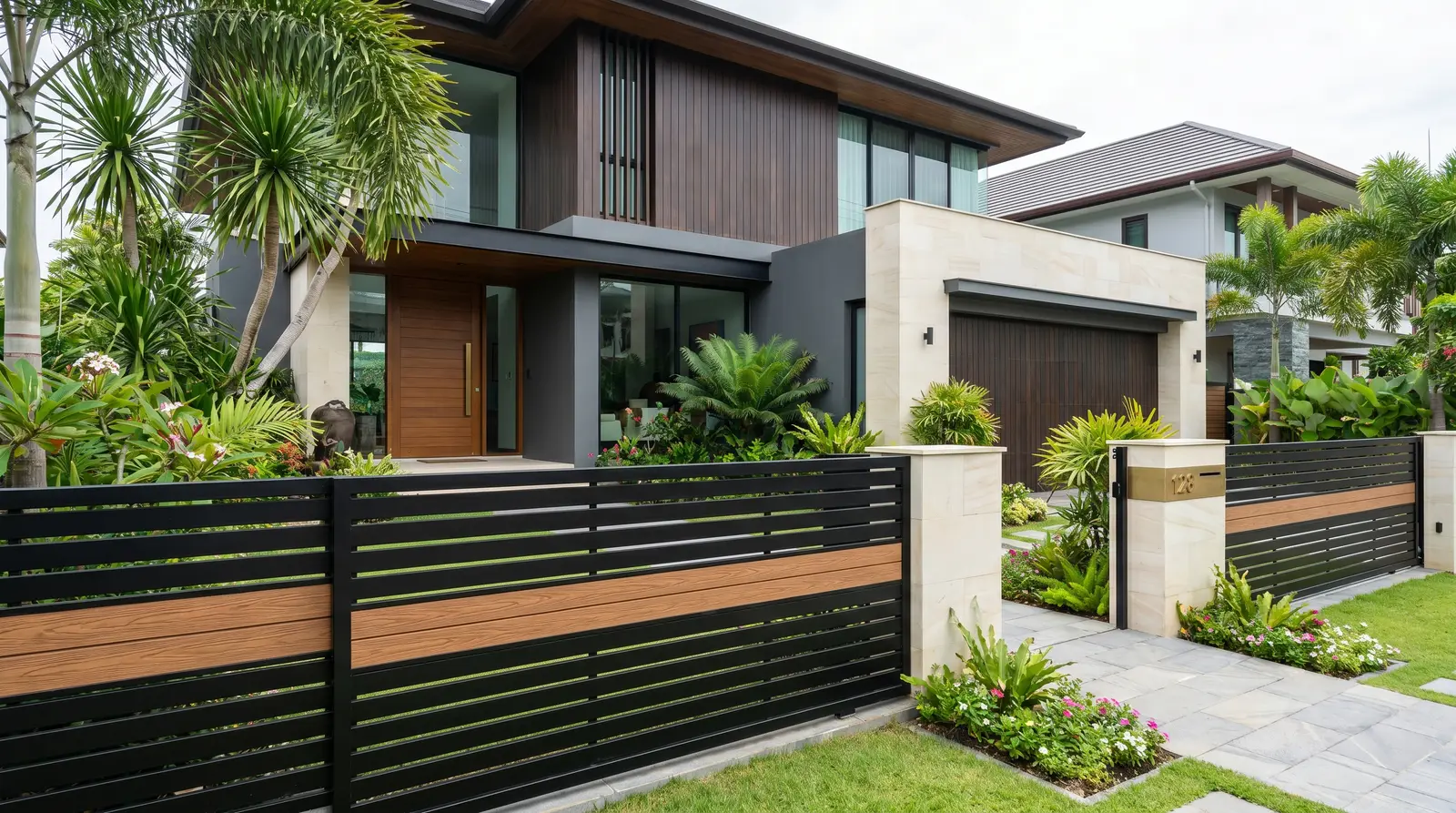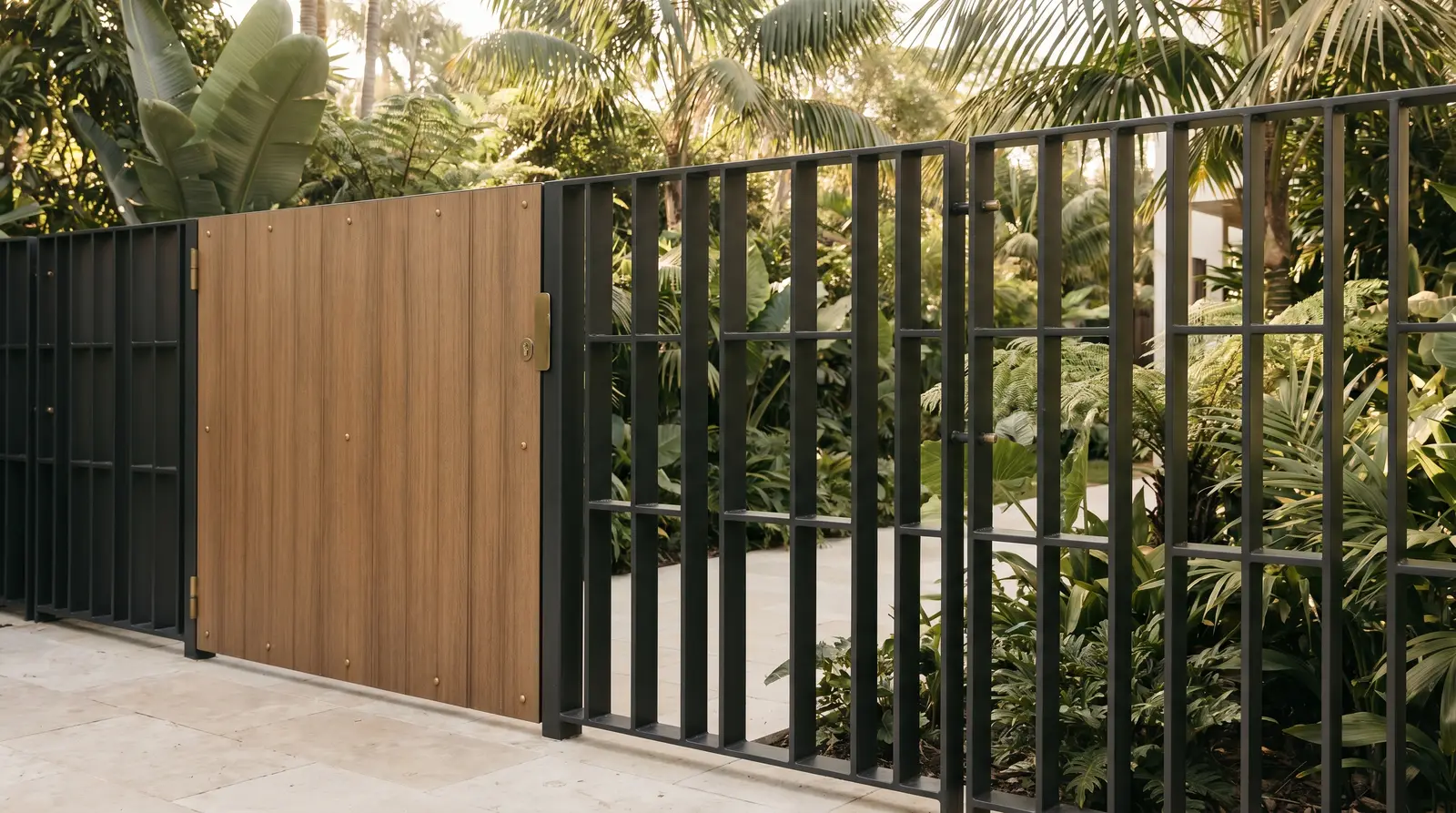
Steel fences almost never fail because the steel was too thin — they fail because of rust, especially in Samut Prakan and Chonburi where humidity meets salt air. So should you buy galvanised fencing or painted prefabricated panels, and what paint system actually works? This guide covers each corrosion system, the annual maintenance routine, and how to repair a rust spot before it spreads across the panel.
Galvanising versus paint
Galvanising coats steel in zinc. Hot-dip gives the thickest, toughest layer; electroplating looks neat but the coating is thinner. Paint protects through a film, which works well when the full system is applied — but the moment the film is scratched, rust starts there. Zinc keeps protecting the steel even where the surface is marked.
Prefabricated fencing — what to check
Prefabricated panels install quickly and come in consistent sections. Check the coating type, steel thickness and how panels connect to posts, because site cuts and drilled holes remove the original coating. Every cut and hole must be touched up with rust primer before assembly, otherwise corrosion starts at the screw holes first.
The paint system that works
Three stages. Prepare the surface by removing all rust and grease. Apply two coats of rust primer into every corner. Finish with two coats of UV-stable topcoat. The classic mistake is painting over existing rust, which flakes within months; unground welds are the other place paint refuses to hold.
Where rust always starts
Five places to inspect: post bases in contact with standing water, uncapped post tops, unfinished welds, screw holes and site cuts, and the inside of box sections where water collects. Four of the five are preventable at installation — cap the posts, keep bases clear of standing water, and touch up every cut and hole.
Annual maintenance takes an hour or two
Once a year, wash the fence with clean water to remove salt and dust — more often near the coast. Then walk the line looking for flaking paint or small rust spots. Sand any you find and touch up with primer and topcoat. That yearly hour costs a fraction of repainting the whole fence later.
Choosing sensibly
Inland and budget-conscious: painted box steel with a full system and annual care is fine. Near the sea, beside canals or on industrial sites: specify hot-dip galvanising from the start, because the extra cost at installation is usually less than rust repairs and repainting within five years — and the fence still looks new.