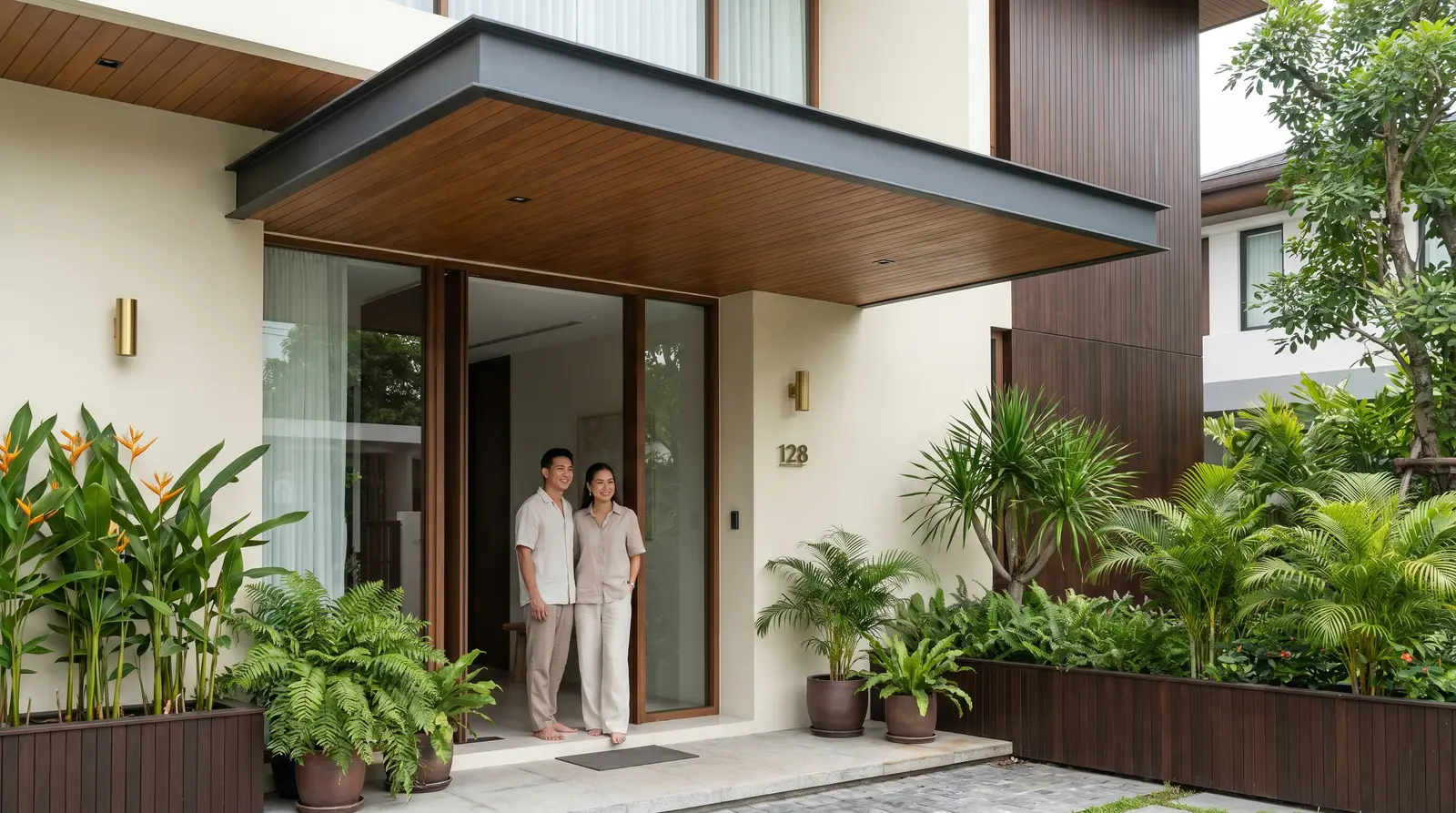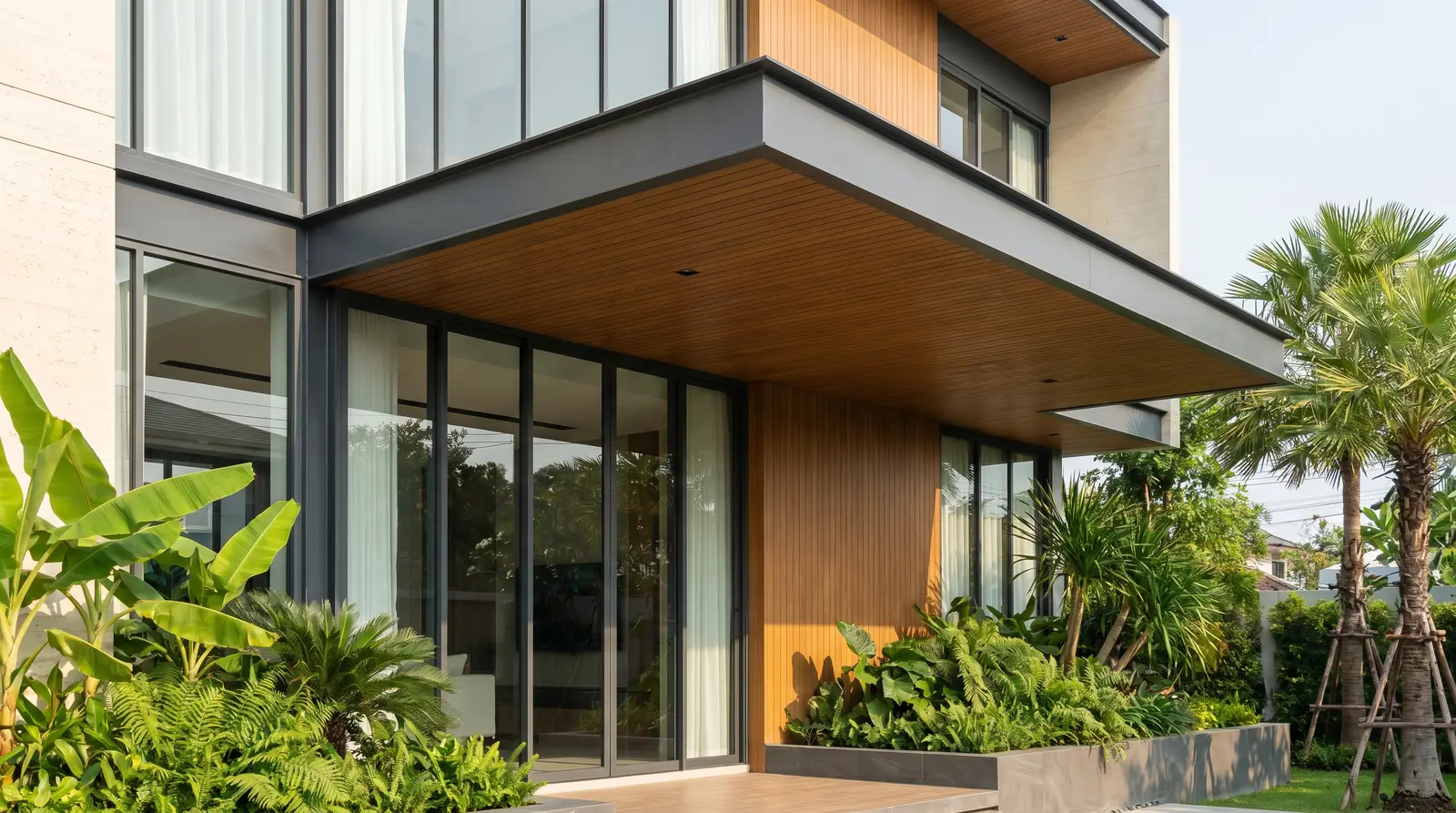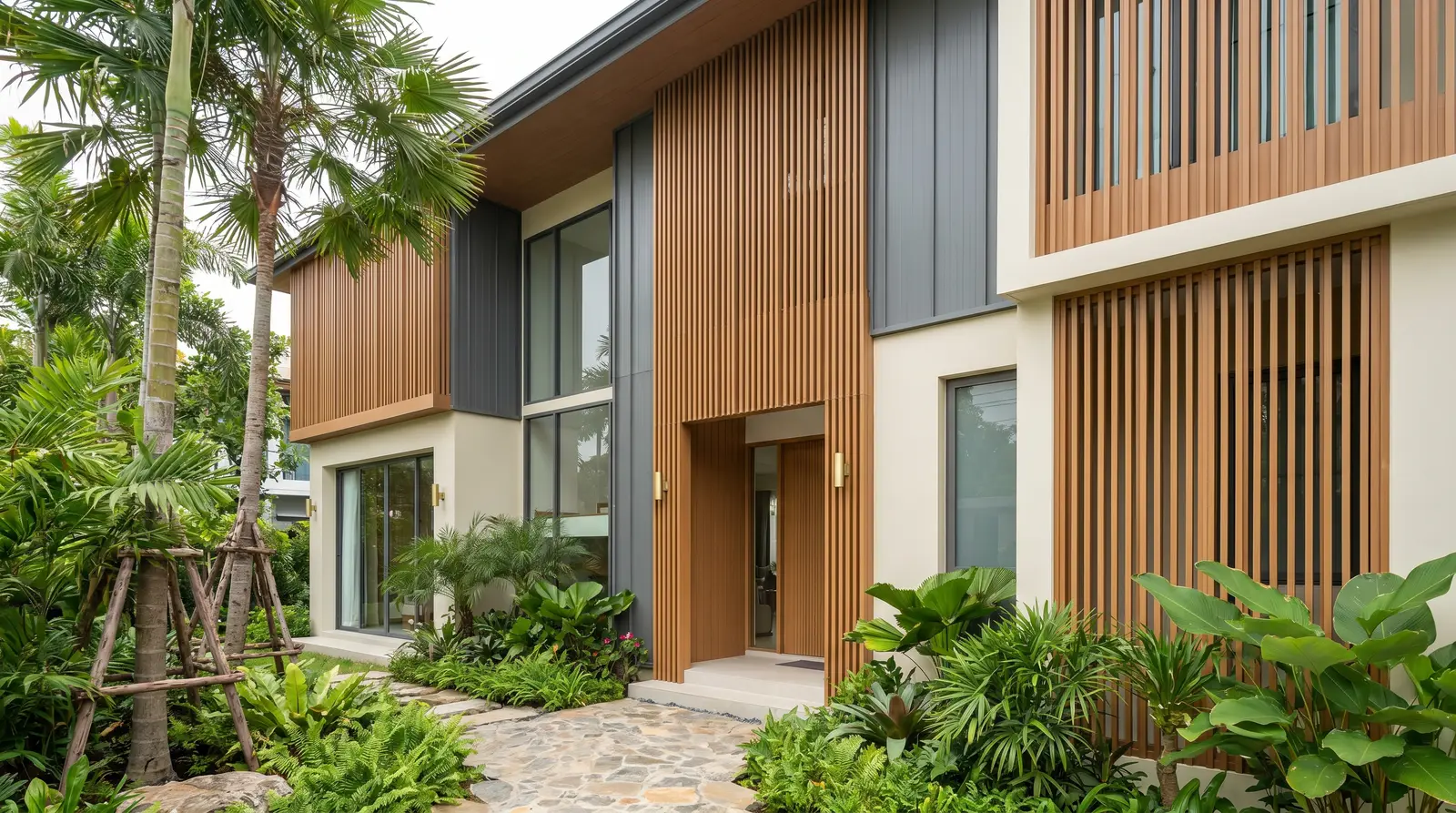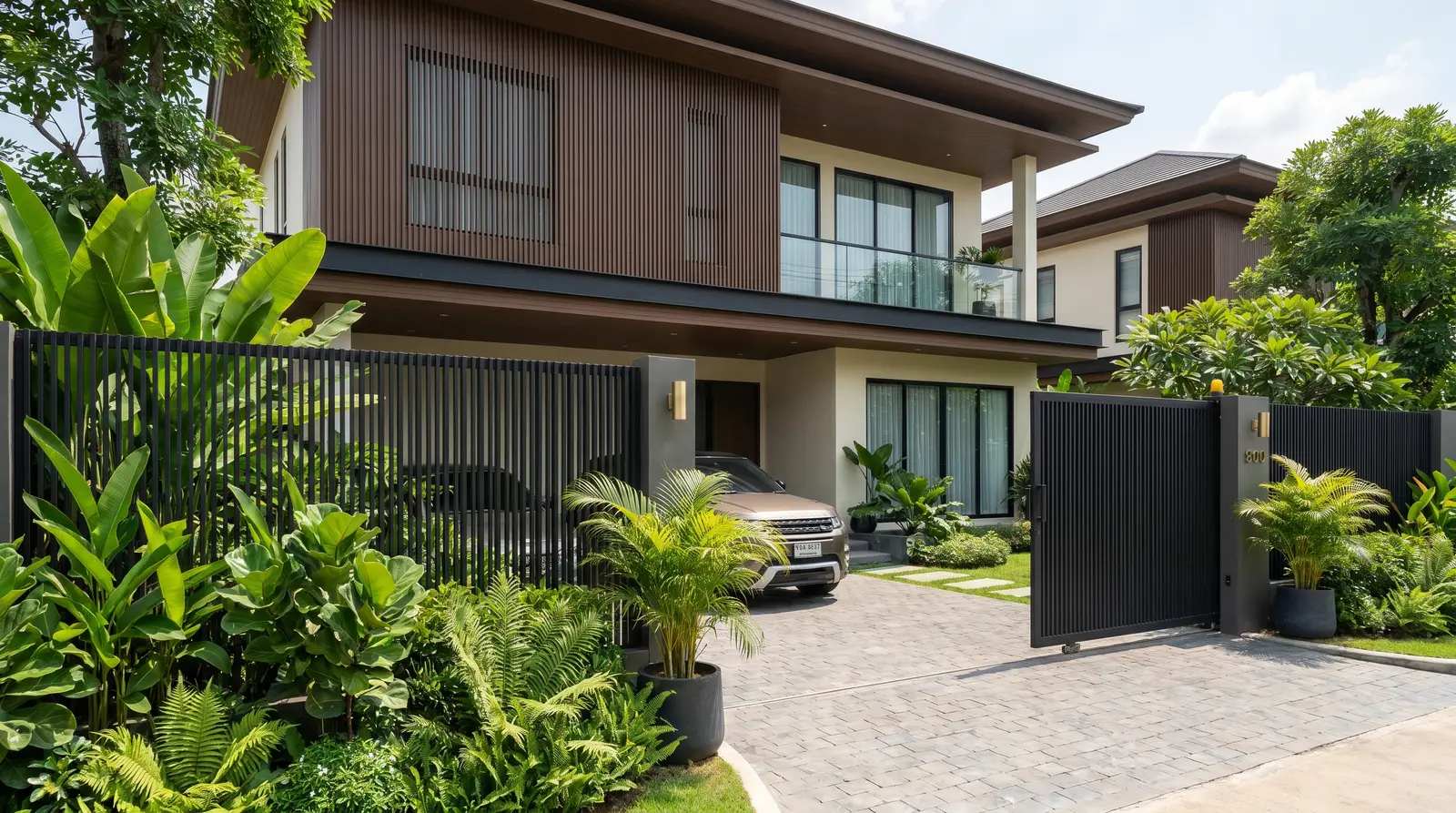
There are so many awning designs that choosing gets hard, and “modern awning” covers several very different looks. This guide collects the styles most used on Thai homes right now, with the house types they suit, the materials involved, the trade-offs and where the cost differences sit — so you pick something that works on your actual frontage, not just in a photo.
Flat-profile awnings on slim steel
The most modern look, at home on minimalist or exposed-concrete houses: clean, thin lines in black or white painted box steel, roofed with insulated metal sheet or polycarbonate. The catch is that a flat profile still needs a concealed fall of at least 3–5 degrees and a proper gutter, otherwise water pools and staining follows.
Translucent awnings — polycarbonate and acrylic
Best where you do not want to darken the frontage. Corrugated or solid polycarbonate is affordable and easy to install; clear acrylic sheet looks better and resists scratching, at a clearly higher price. Choose UV-filtering grades in both cases so the space does not overheat and the sheet does not go brittle.
Insulated metal sheet — best heat performance
If the frontage takes full afternoon sun, PU- or PE-insulated metal sheet performs best, cutting both heat and rain noise. The limitation is that it is opaque. Many homes mix systems: mainly metal sheet with translucent panels inserted in places to keep daylight in.
Awnings combined with WPC battens
A strong current trend is a steel awning frame with a WPC batten soffit underneath, or batten fins on the side to block low-angle sun. You get timber warmth with synthetic durability, which suits the popular modern-tropical style. Discuss ventilation gaps in the soffit with your installer so heat does not build up.
Retractable and fabric awnings
Good where shade is only wanted some of the time, such as shopfronts and balconies — flexible and quick to fit. The downsides are much shorter fabric life and poor suitability in windy positions. For a ten-year-plus solution, a fixed steel frame with rigid roofing is better value.
Matching the design to your house
Weigh three things: orientation (afternoon sun means prioritising heat performance), house style (modern suits flat slim profiles; Thai-contemporary suits a mono-pitch with deep eaves), and budget, which is driven mainly by area, height and roofing material. Ask your installer to price two options side by side after measuring.