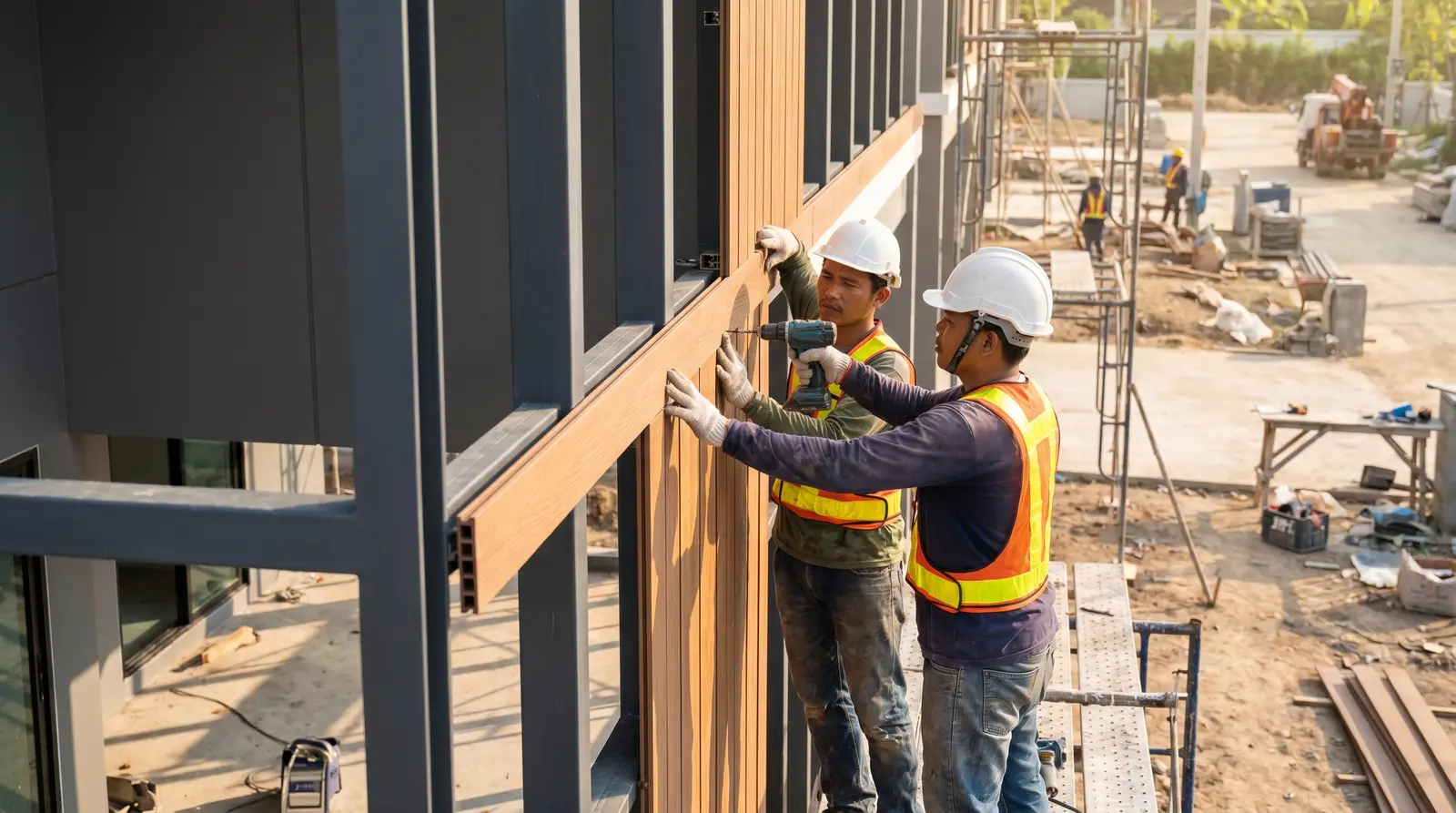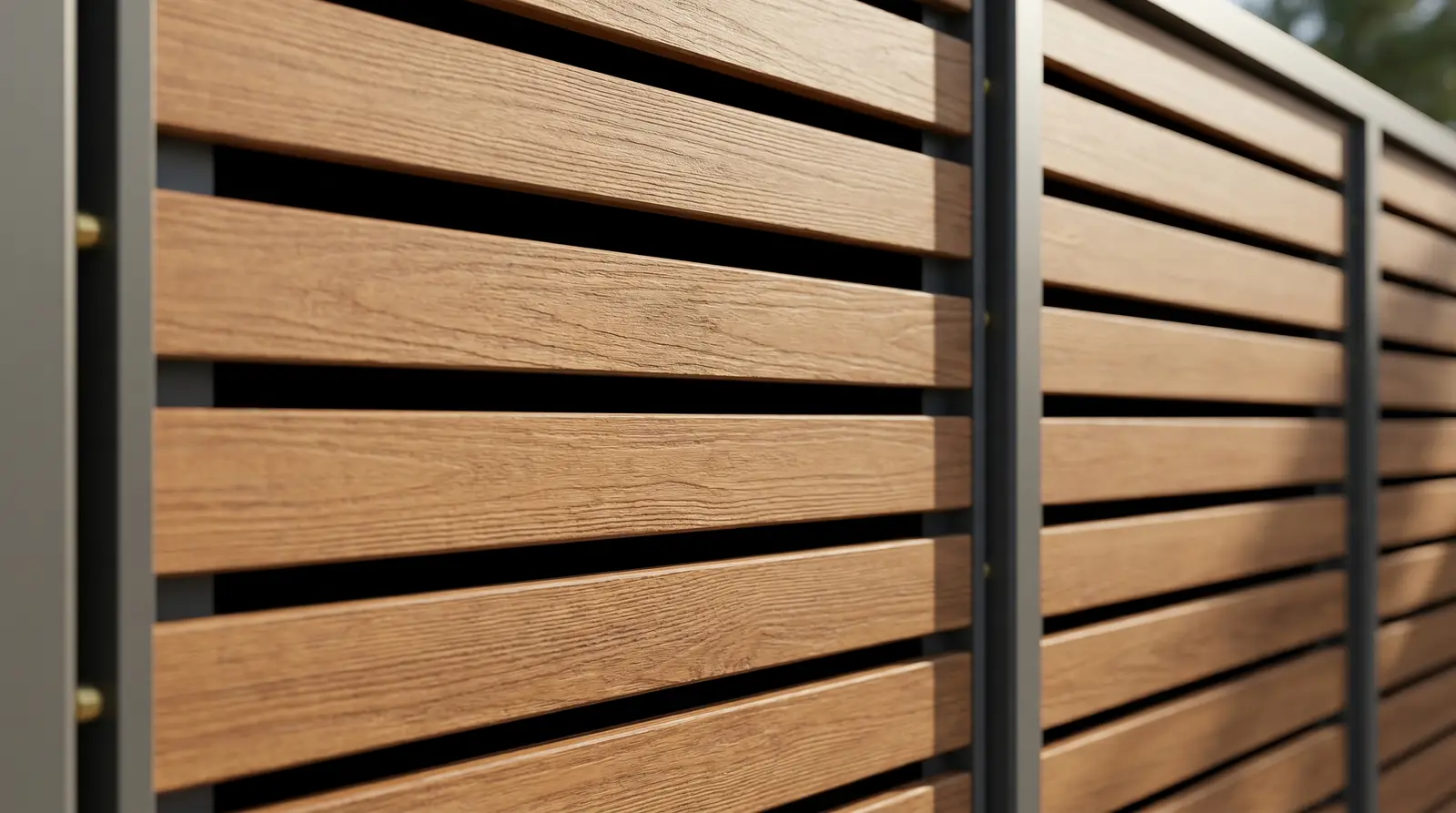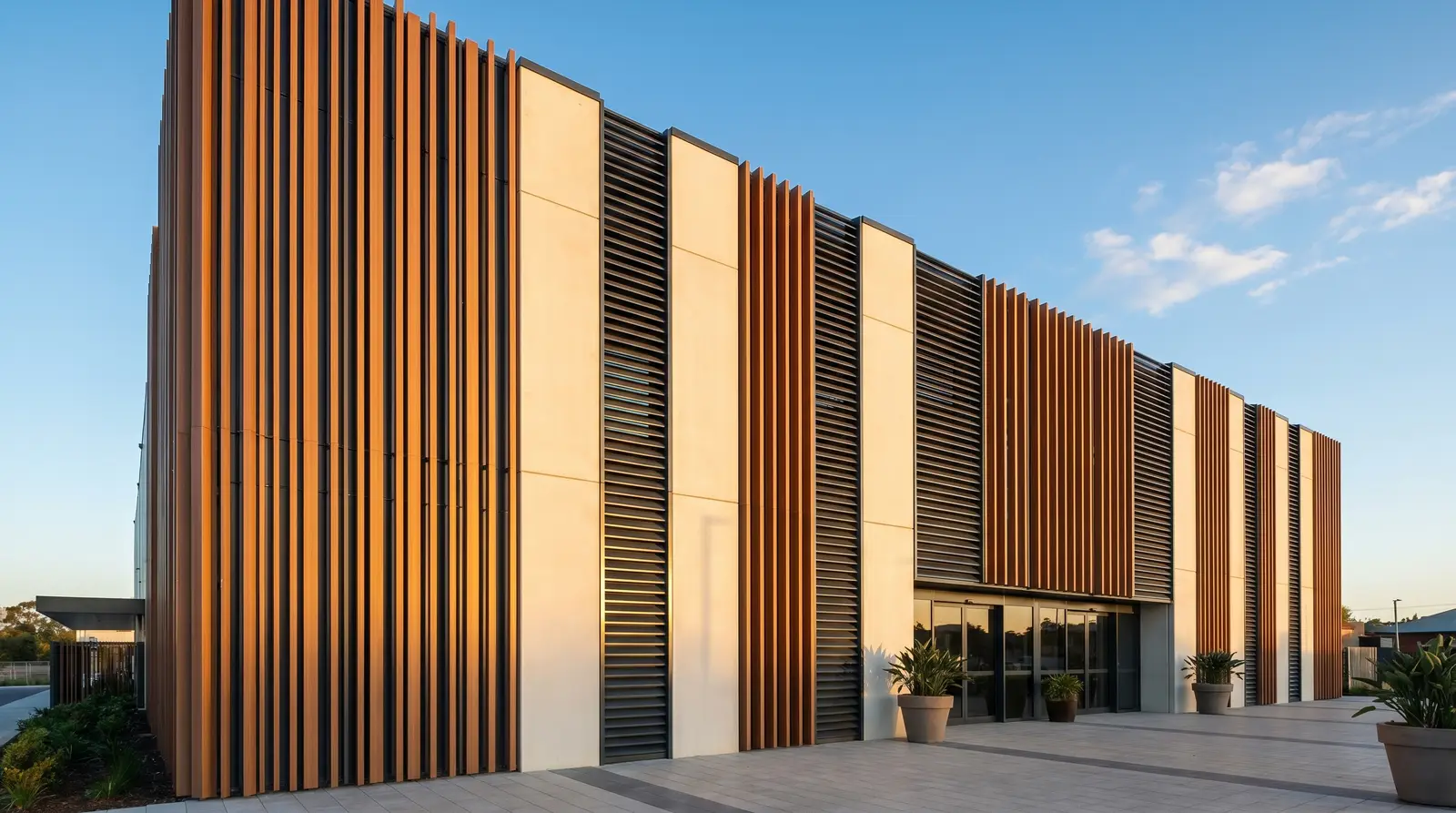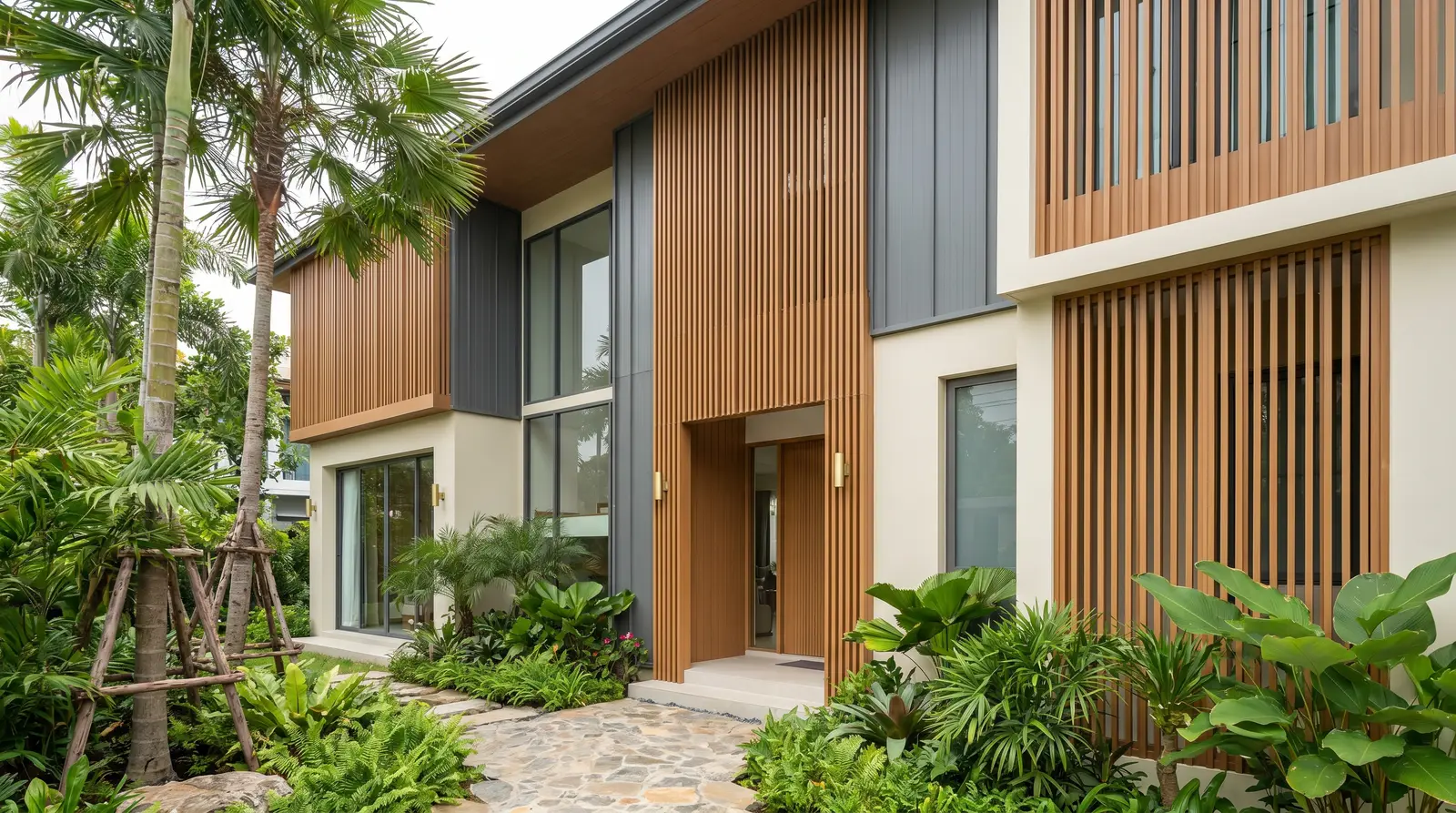
Most people searching for how to install exterior WPC battens want two answers: can I do it myself, and what does installation labour cost? This guide walks through the full sequence — site measurement, steel sub-frame, batten spacing, fixings, expansion gaps and end detailing — and explains how contractors build up their per-square-metre price so you can compare quotes properly.
Step 1 — Measure the site and set the spacing
Measure the real width and height, then decide how much screening you need. Typical gaps run 2–5 cm: tighter gaps screen better but catch more wind load and use more material. Divide the width by (batten width + gap) to get the count, and always allow for offcuts. This step is the single biggest driver of the price per square metre.
Step 2 — Build the steel sub-frame
Battens always need a frame. Most jobs use 1x1" or 1x2" box steel, galvanised or given two coats of rust primer, with purlins at 60–80 cm. For thin hollow profiles or exposed high-level work, tighten that to 50–60 cm to stop sagging. Grind and repaint every weld — rust almost always starts at an unfinished joint.
Step 3 — Fix the battens and allow for movement
Fix with countersunk stainless screws or the profile’s clip system, always pre-drilling so the batten does not split. Leave roughly 3–5 mm of expansion gap per 3 m length: WPC moves with temperature, and battens fixed rigidly at both ends will bow in full sun. On a good job, screw heads are hidden or perfectly aligned.
Step 4 — Finish ends and corners
Ends and corners separate good work from average work. Close them with end caps or colour-matched trims so water and dust stay out of hollow profiles. Soffits need ventilation gaps, and wall cladding should stand 2–3 cm off the wall so air can move behind it and moisture does not build up.
How installation labour is priced
Contractors usually quote per square metre, bundling battens, steel frame, labour and delivery. Prices rise with tighter spacing, working height that needs scaffolding, curved or angled shapes, and higher batten grades. If a quote looks unusually cheap, check whether the frame is galvanised and how thick the battens actually are.
DIY or hire an installer?
A small screen fixed to an existing frame is a reasonable DIY job. High-level work, new welded frames and wind-loaded facades are not — the risk sits in the structure and fixings, not the battens themselves. Substandard frames usually show up within one or two years as sagging battens or rust streaks down the wall.