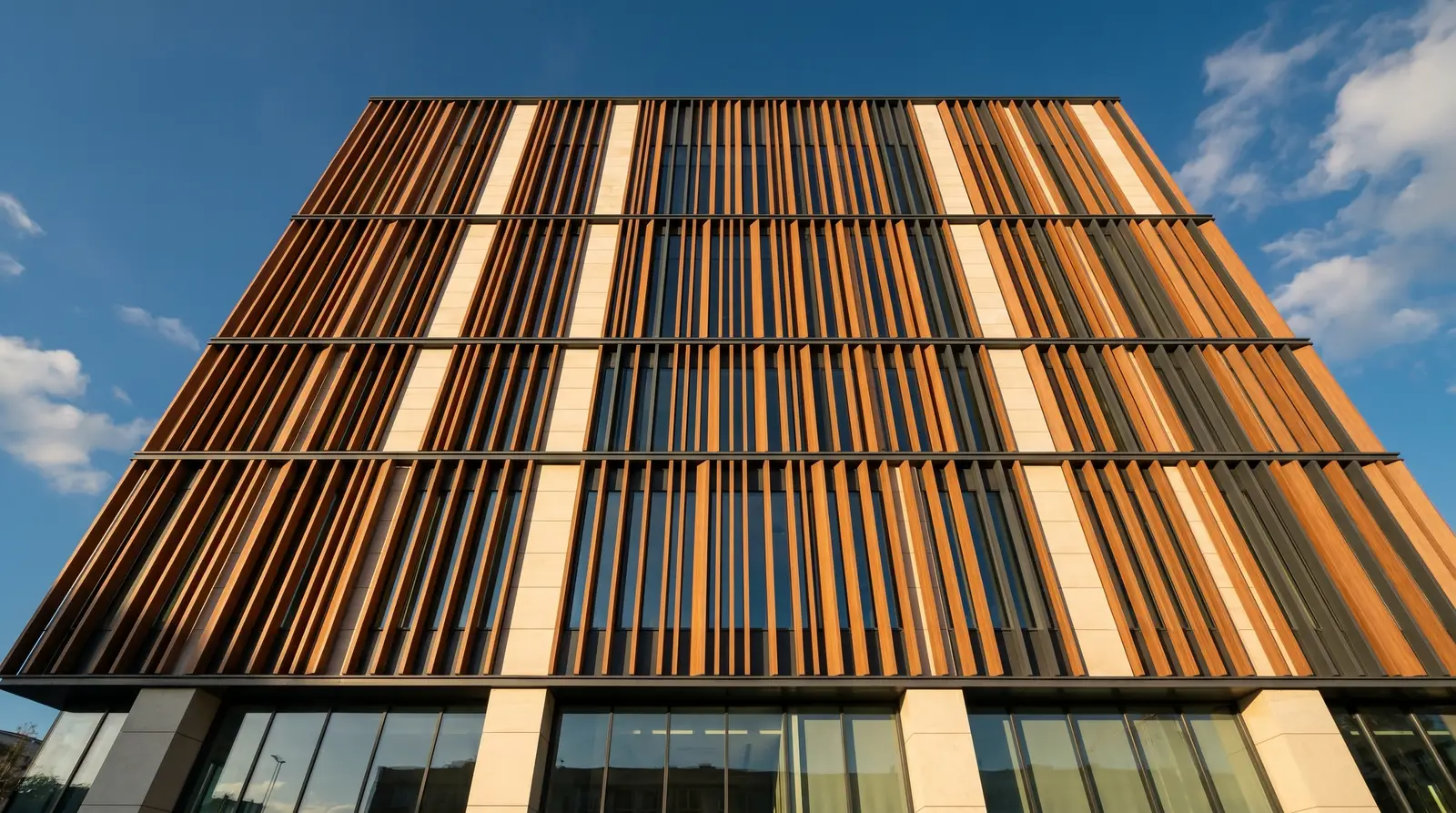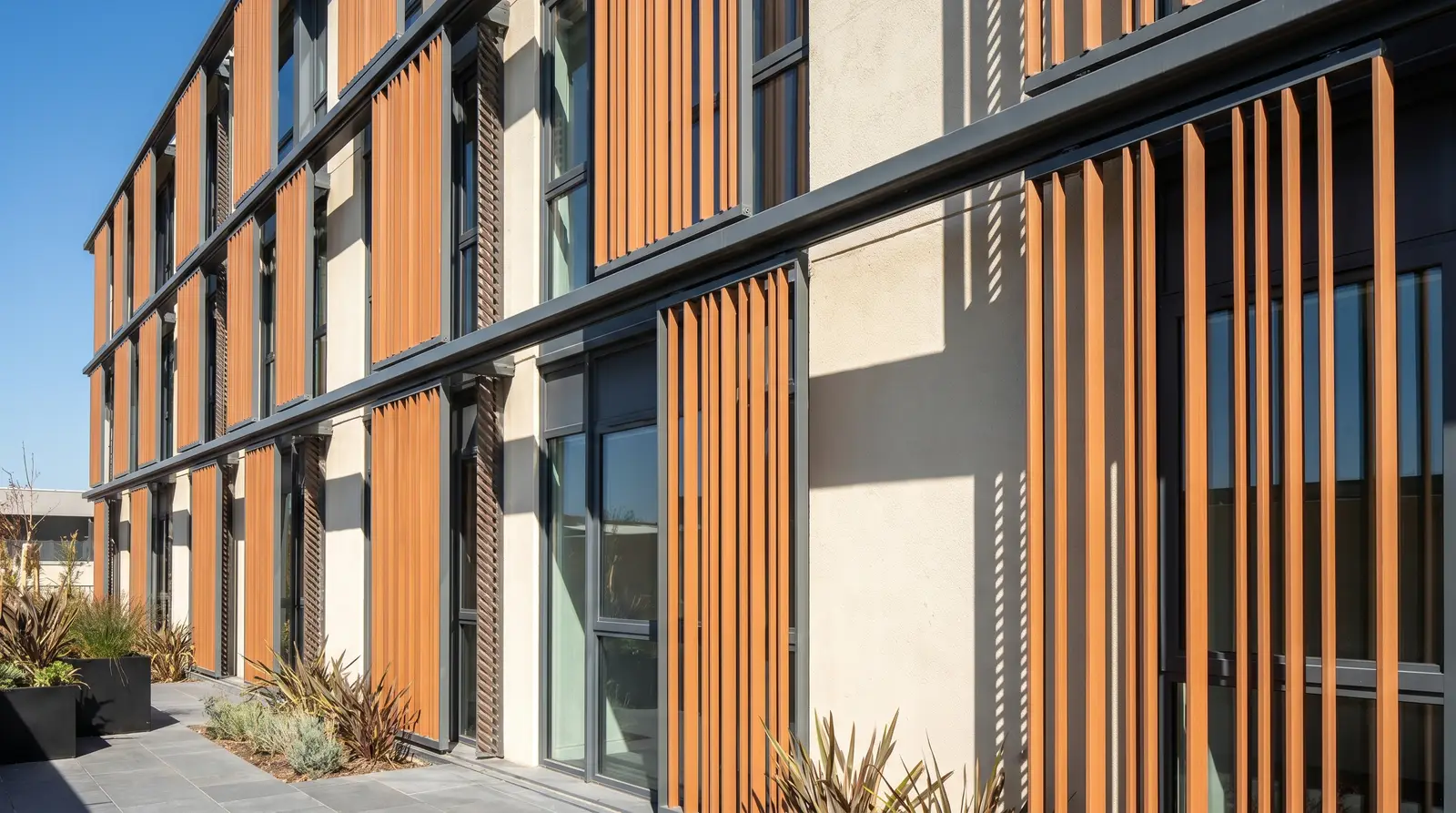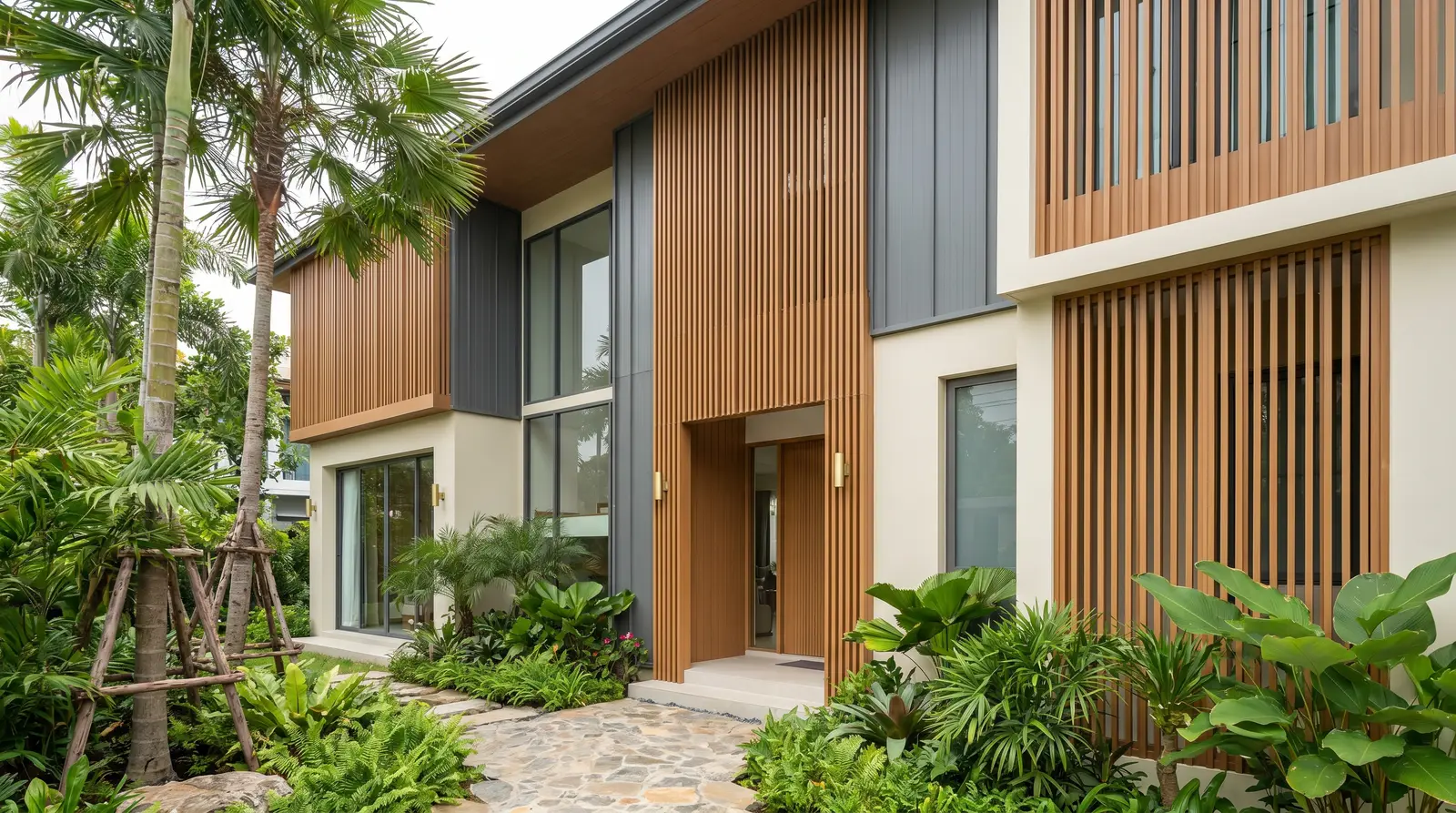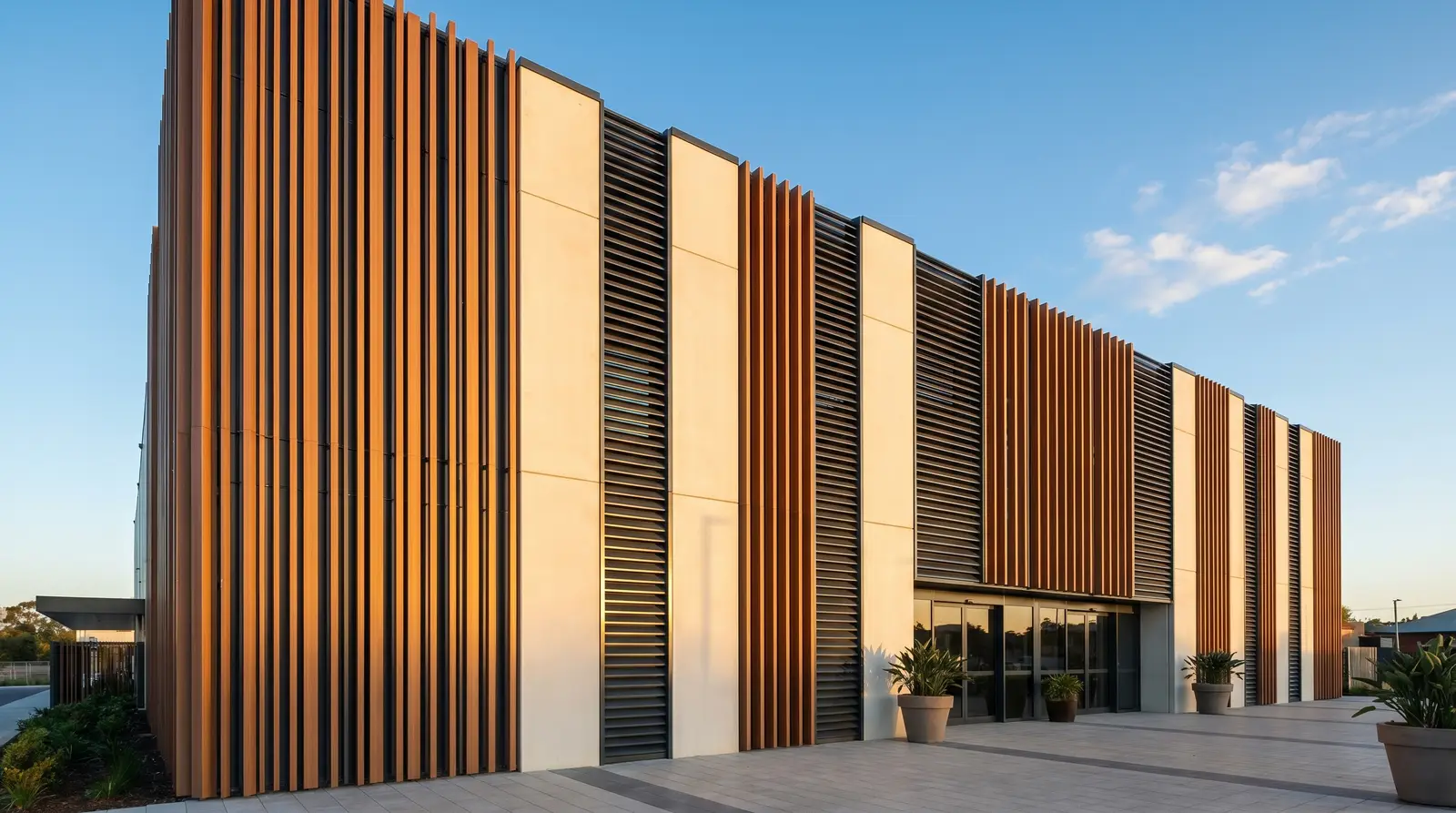
The word “facade” gets used constantly in Thai residential and commercial design, but it means more than most people assume — a facade is not automatically a sun-shading screen. This guide explains what a facade actually is, how it differs from shading battens and decorative cladding, the common types and materials, and which suits which building, so you can brief a designer or contractor precisely.
What a facade actually is
The facade is the building’s outer skin — the face people see. In modern construction it usually means an additional layer fixed over the structural wall that handles appearance, shading, privacy and heat reduction together. A shading screen is therefore one kind of facade, but a facade need not be a screen.
Facade versus sun-shading screen
A shading screen is a slatted panel focused on blocking sun and filtering sightlines. “Facade” is the umbrella term for the outer envelope, which might be aluminium composite panel, expanded metal mesh, glazing, fibre cement or WPC battens. Screens solve sun; facades solve image and function at once.
Common facade types in Thailand
Batten facades in aluminium or WPC give warmth and airflow. Panel facades in aluminium composite or fibre cement give a flat, modern surface. Mesh facades in expanded metal or perforated sheet play with light and stay light in weight. Fin facades — vertical or horizontal blades — are angled to block sun from a specific orientation.
Do facades really cut heat?
Yes, when designed properly. The facade creates an air layer between skin and wall so heat does not radiate straight in, and it shades glazing. What matters is the offset from the wall, the blade angle and the orientation: west elevations need afternoon sun blocked, south elevations favour horizontal fins. Designing to orientation beats simply using thicker material.
Cost drivers
Price depends on material, working height, the complexity of the support frame and scaffolding. Tall buildings cost far more to install because wind loading and safety must be engineered. Ask any contractor about frame type, rust protection, how it fixes back to the existing wall, and the installation warranty.
Choosing the right facade
Homes wanting warmth suit WPC battens — easy to maintain. Offices and showrooms after a sleek image suit aluminium composite or perforated panels. Factories and budget-driven buildings that need airflow are well served by expanded metal and painted steel fins.