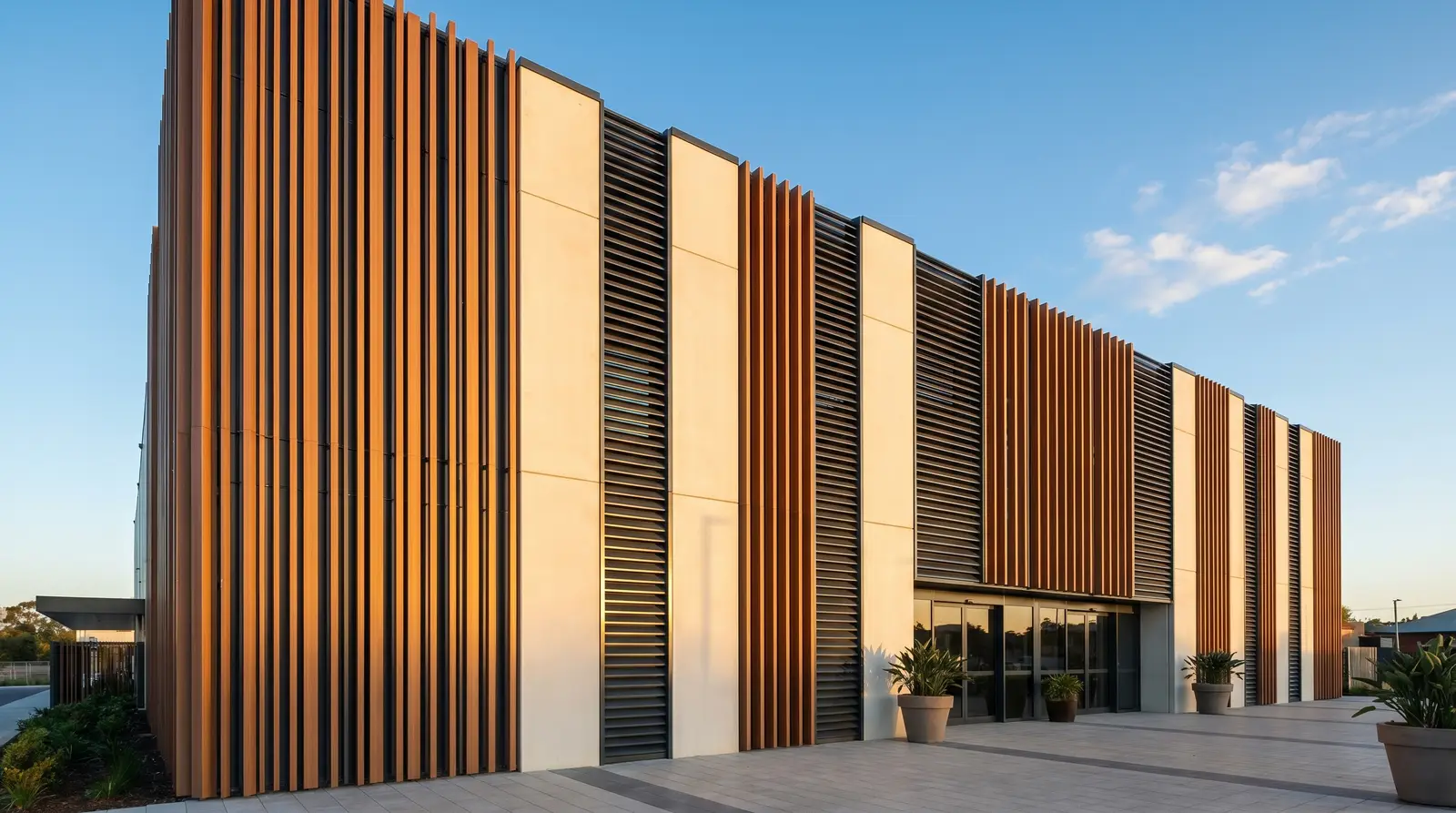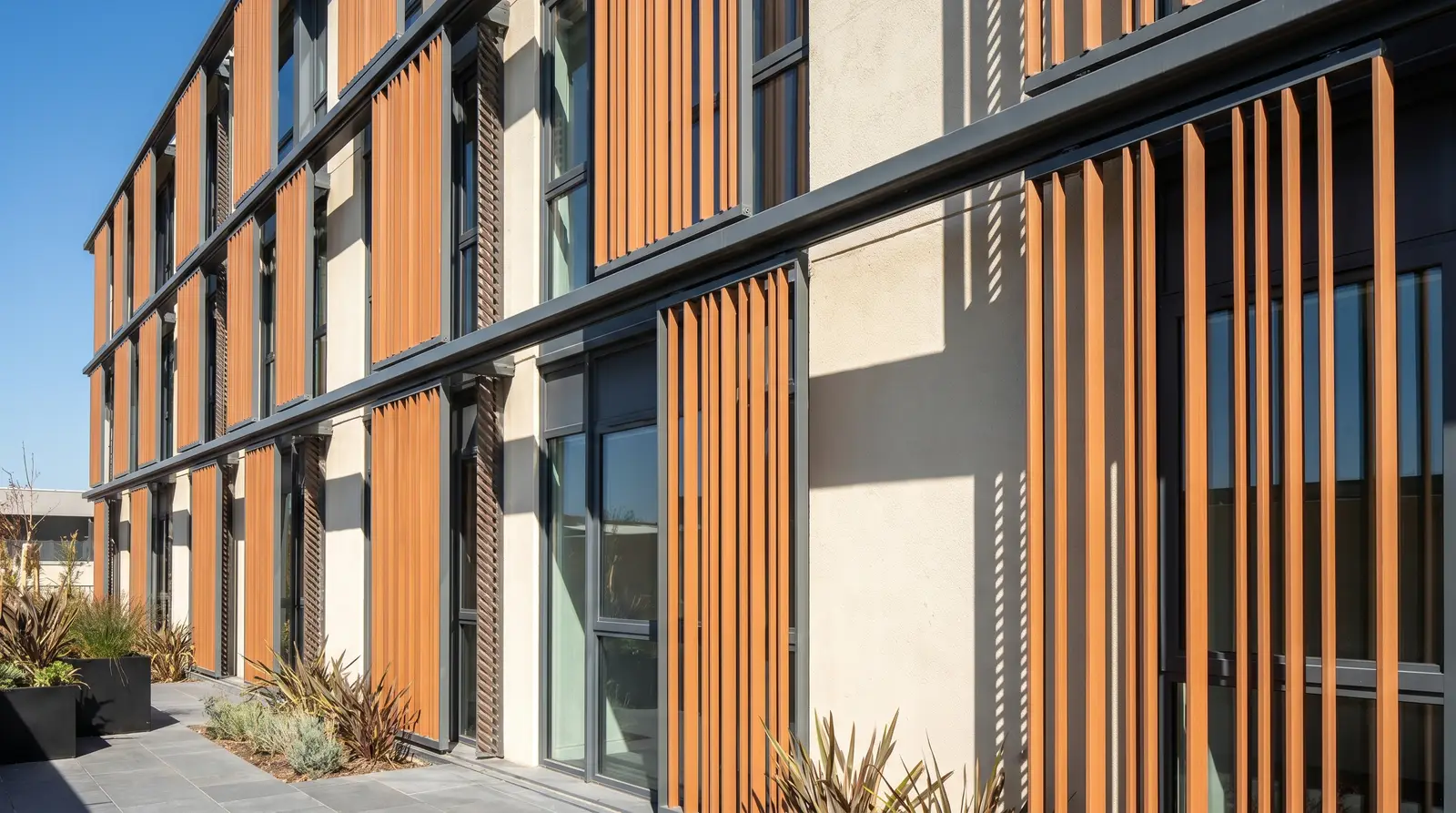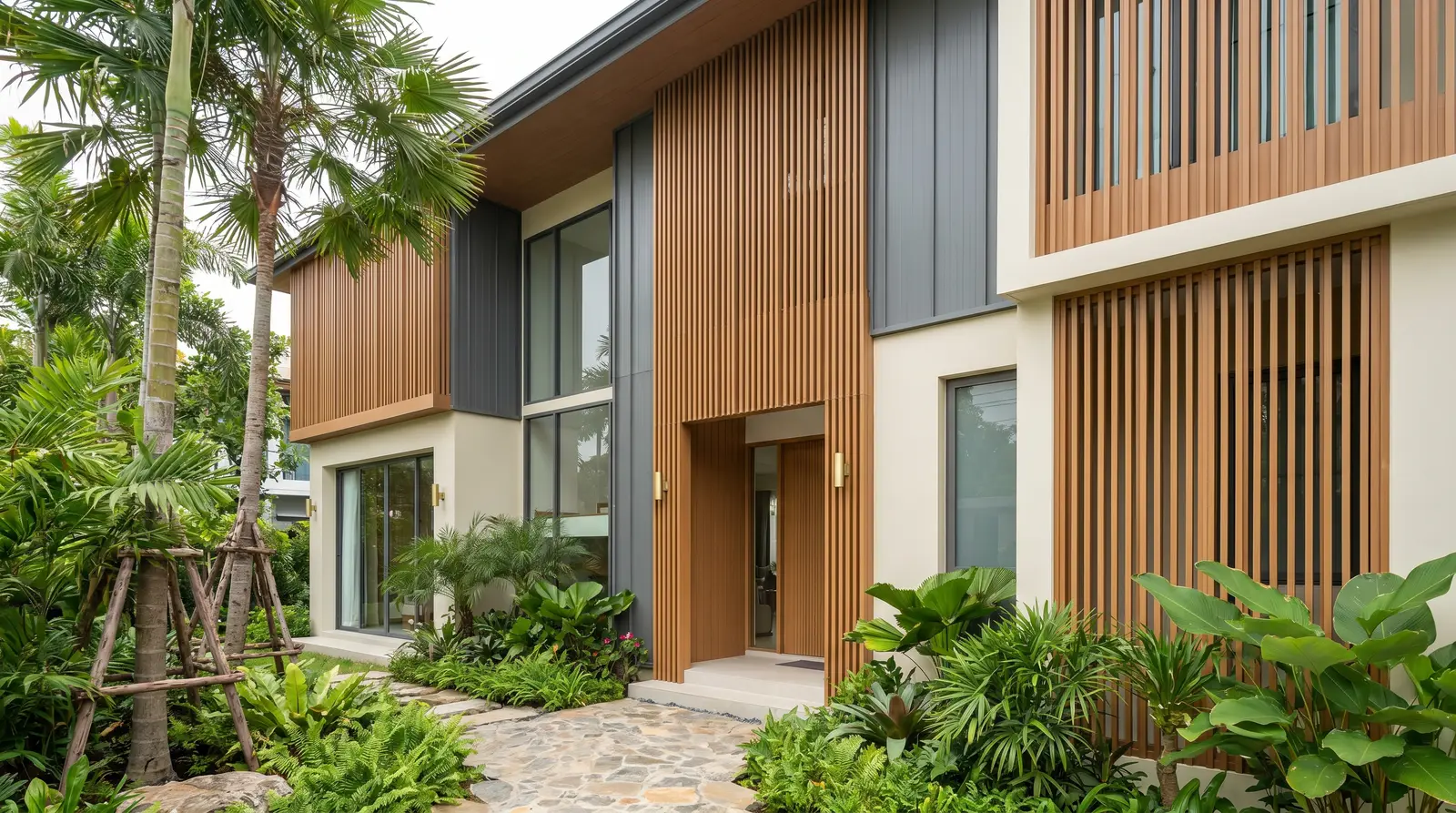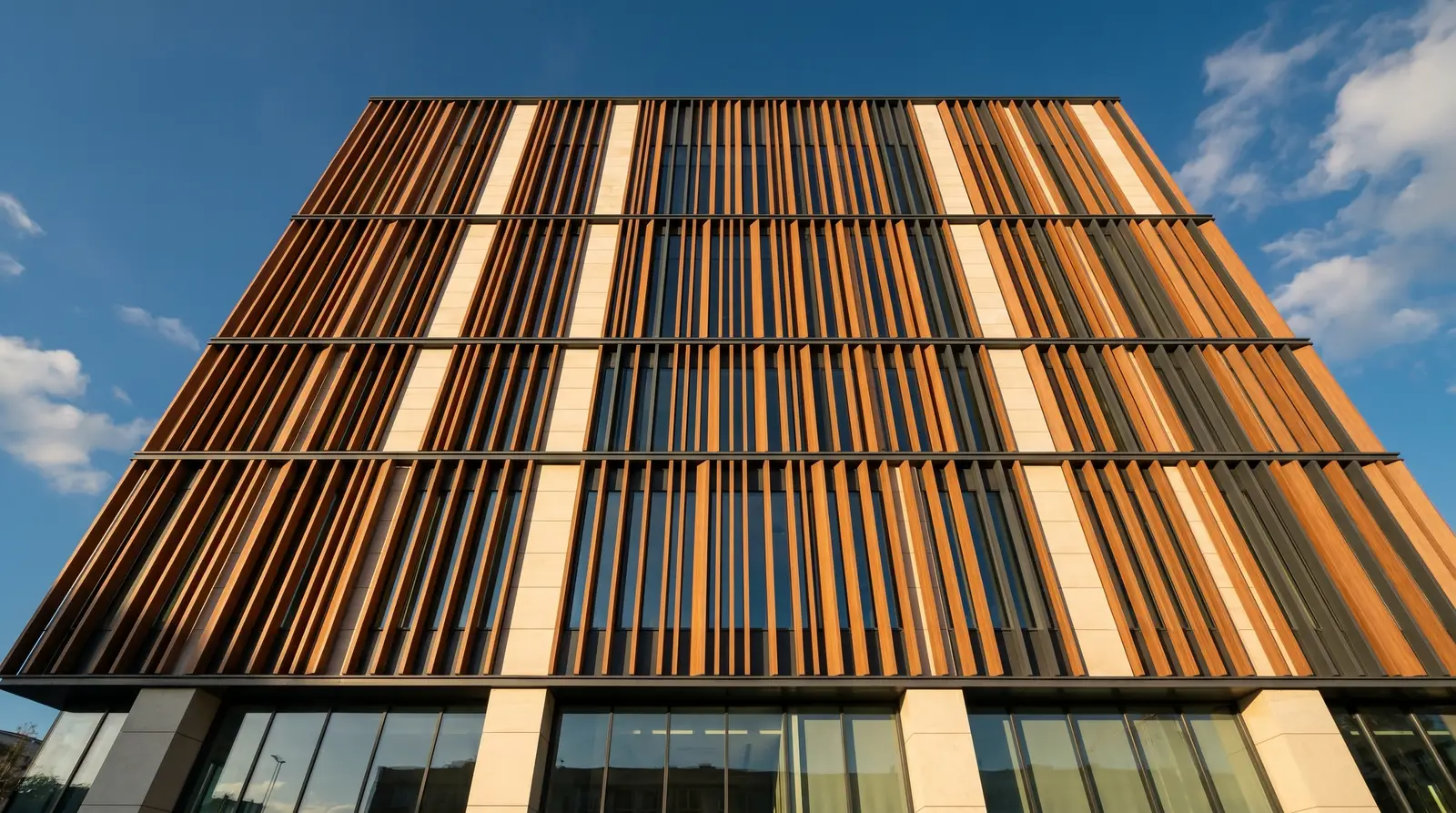
Sun-shading screens are the most effective fix for Thai homes taking full afternoon sun, because they stop heat before it reaches walls and glazing instead of forcing the air conditioning to catch up. But a screen fitted at the wrong angle or on the wrong elevation barely helps. This guide covers material choice, blade angle, spacing and offset — the details that decide whether shading actually works.
Start with sun orientation
West elevations are the hardest in Thailand: afternoon sun brings both accumulated heat and a low angle that shines straight into rooms. South gets sun most of the day but at a higher angle; east is warm in the morning and easier to manage. Rule of thumb: vertical fins for west and east where the sun is low, horizontal fins for south where it is high.
Choosing the material
Three materials dominate. Aluminium is light, rust-free and available in many finishes — ideal for taller buildings. Painted or galvanised box steel is stronger and cheaper, suiting homes and factories. WPC battens give a warm timber look with no repainting, popular on houses. All three work well if the frame is strong and properly protected.
Blade angle and spacing
Good shading admits daylight but blocks direct sun. Blades are typically set at 30–60 degrees, tilted away from the sun path. Tighter spacing shades more but costs view and breeze. If you want both view and shade, use wider blades at slightly wider spacing and tune the angle rather than closing the screen up.
Offset from the wall
The common mistake is fixing the screen tight to the wall with no air gap, which traps heat between screen and wall. Allow at least 10–20 cm on a shading facade so air can carry heat away, more if space allows, and keep top and bottom open so air can circulate fully.
Shading windows and large glazing
If the real problem is sun through glass, shade the glass first — a projecting fin above the window, or a screen panel in front of the affected elevation. That is far cheaper than cladding the whole wall and has a clear effect on room temperature. Many homes combine it with an awning or roof extension for shade plus rain protection.
Maintenance and lifespan
Shading sits fully exposed, so the frame and fixings age first. Specify galvanised steel or two coats of rust primer, use stainless screws, and inspect fixings annually — especially near the coast in Chonburi where salt air accelerates corrosion. The blades themselves only need a rinse.