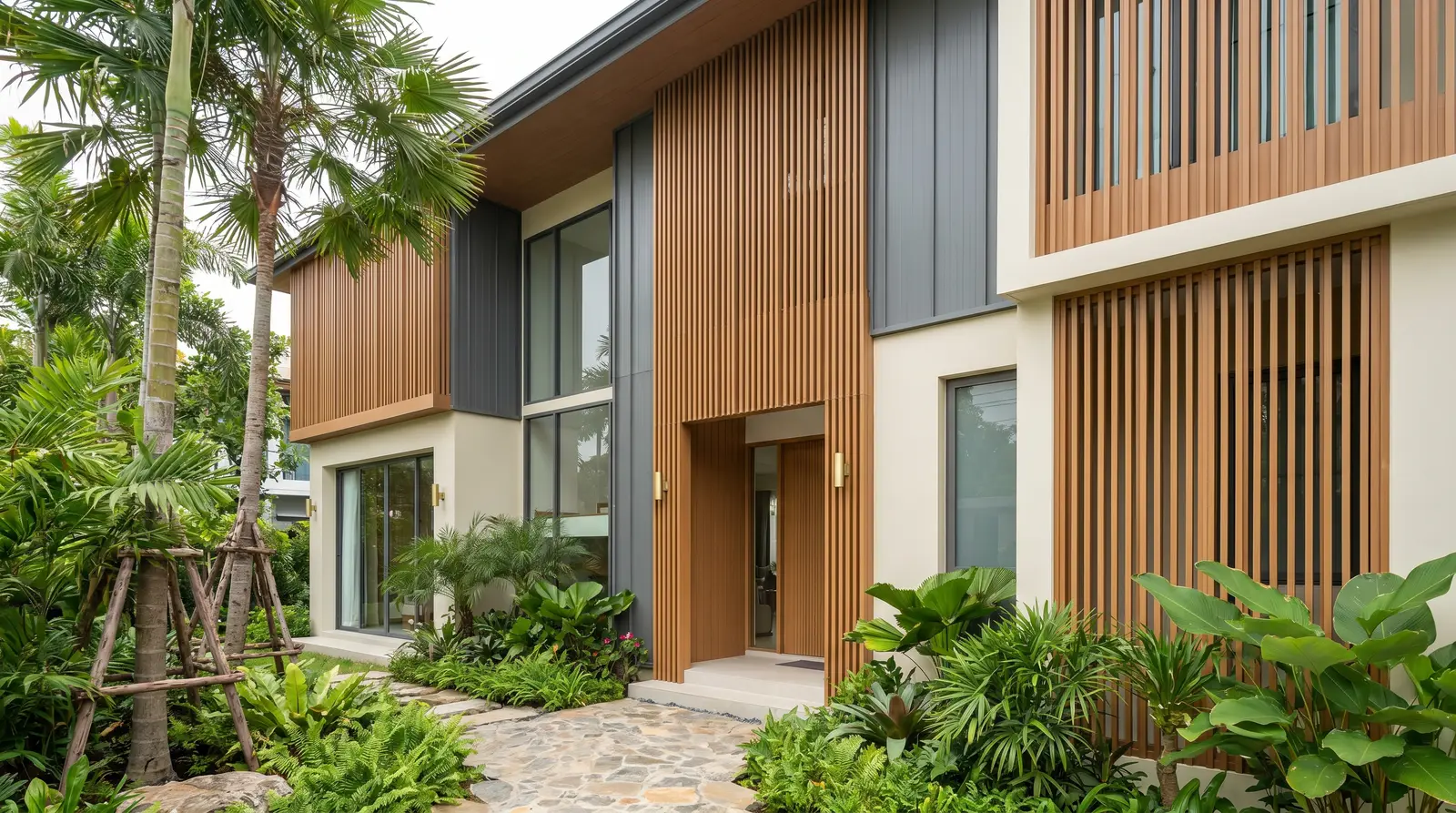
Modern steel gates have become the default on new Thai homes: clean lines that sit well with boxy architecture and materials like WPC. But a gate is not decided by pattern alone — swing versus sliding, leaf weight, wheels and track, hinges and motor all have to match. Here is everything to settle before ordering a front gate that both looks right and lasts.
Swing or sliding — decided by your frontage
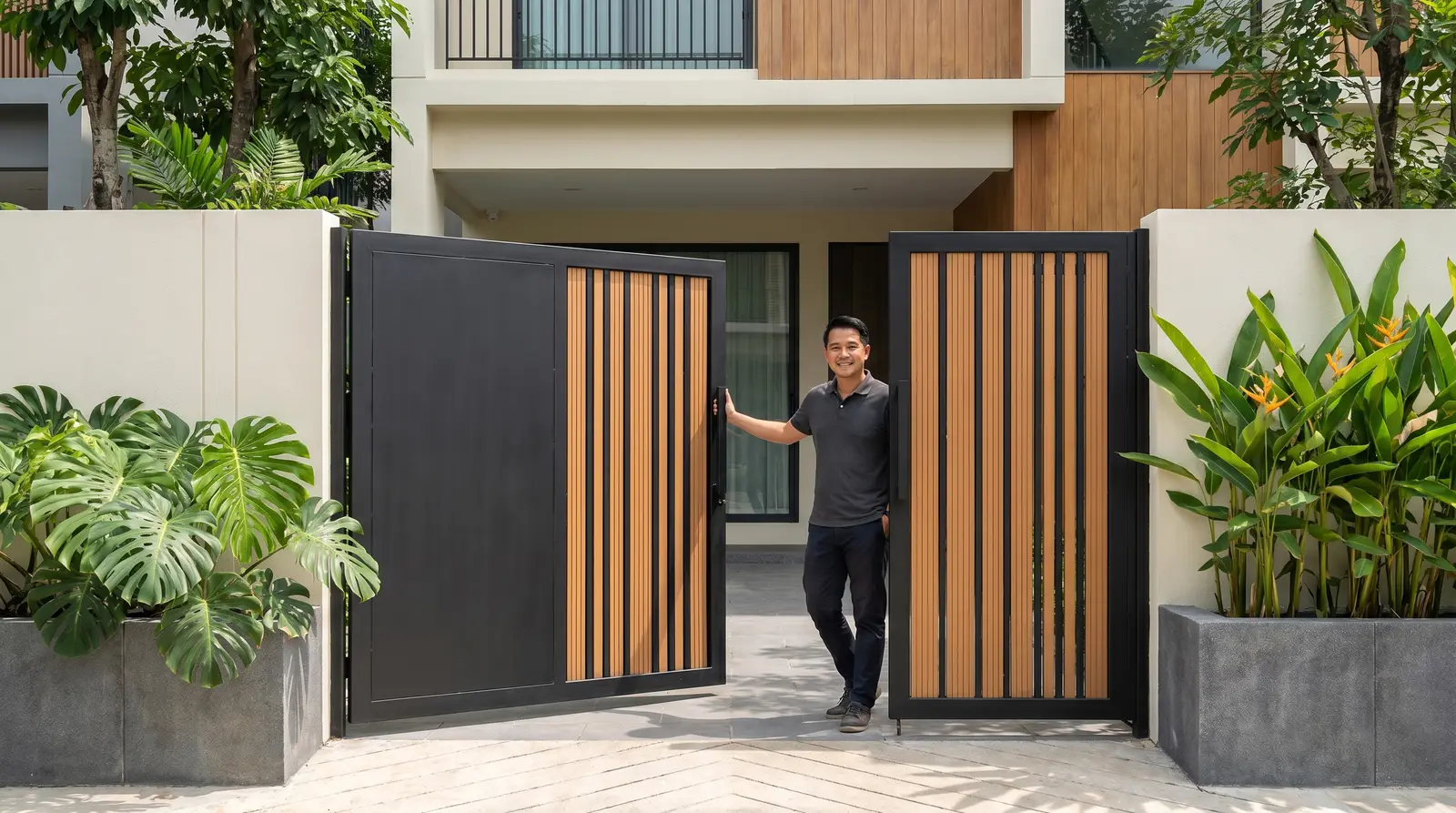
Swing gates suit properties with room inside for the leaves to open. They are simpler, cheaper and need no floor track. Sliding gates suit short frontages, cars parked close to the gate or sloping driveways, because the leaf runs sideways — but you need clear side space equal to the gate width for it to run into.
Popular modern designs
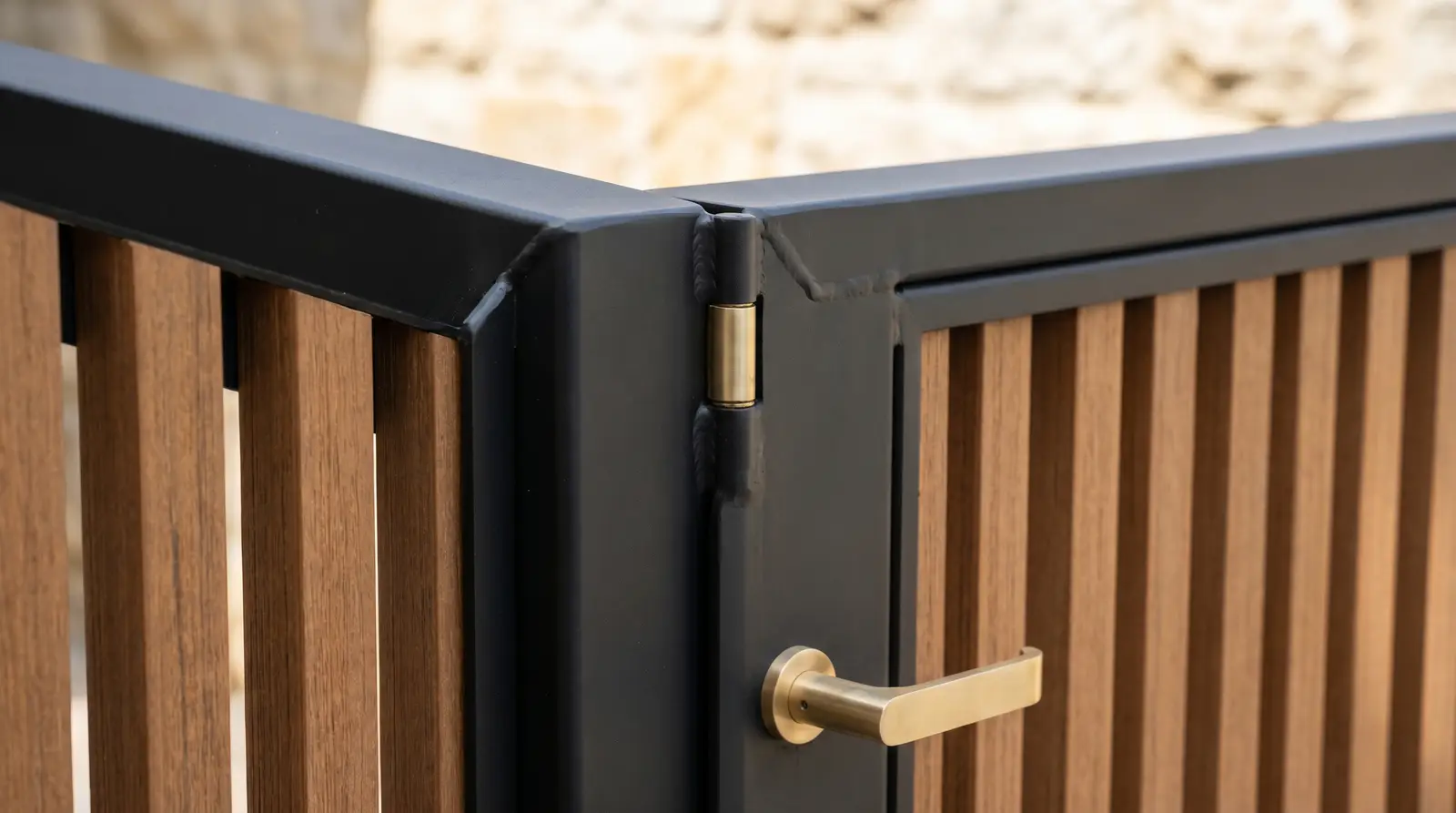
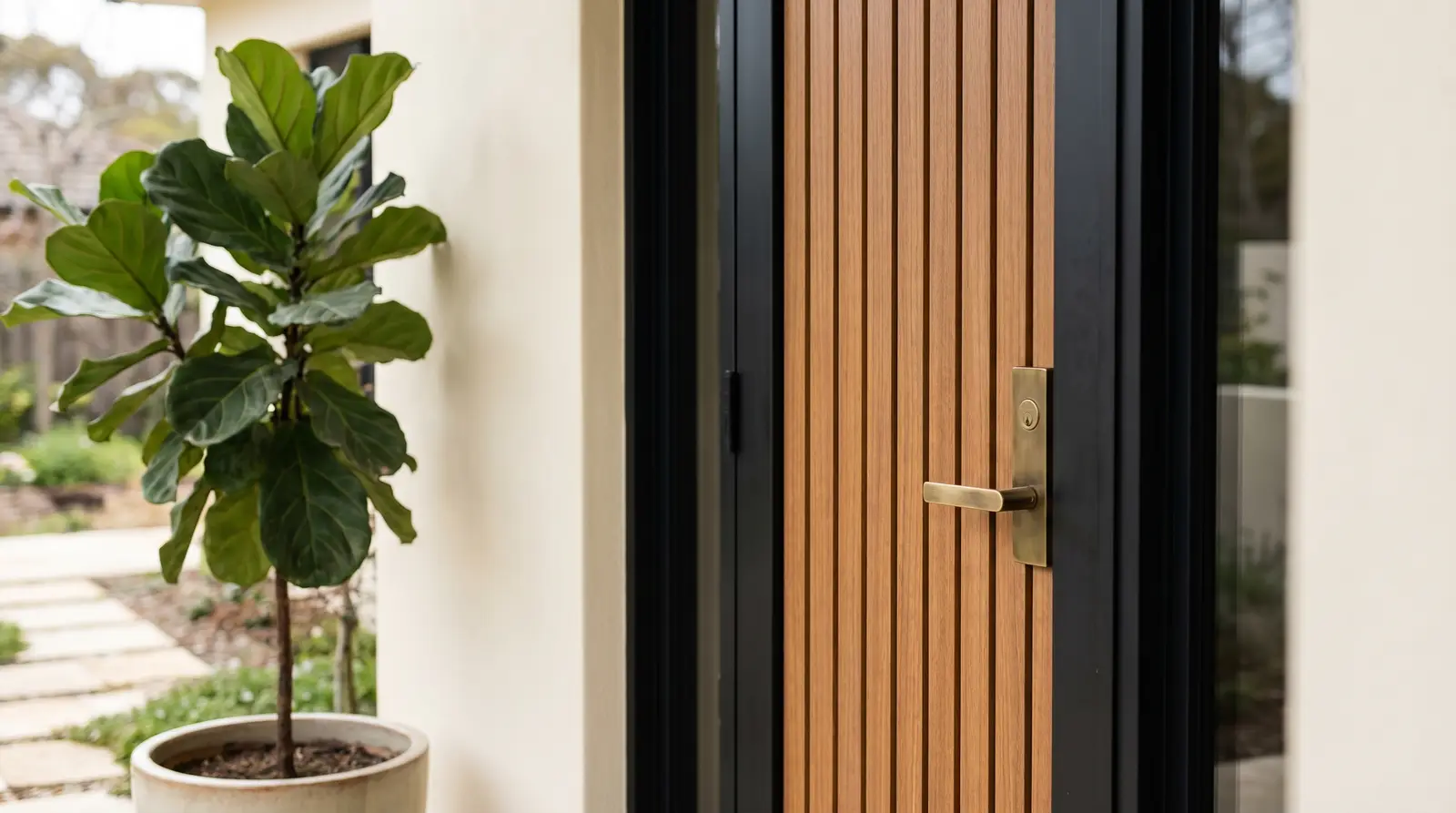
Three dominate: tight vertical bars for privacy and a clean face; spaced horizontal lines that make the frontage look wider; and steel combined with WPC battens for warmth that matches batten fencing. For privacy without weight, expanded metal or perforated sheet infill inside the frame works well.
Leaf weight is what makes it last
Over-heavy steel drops the leaf, tires the hinges and overworks the motor; too light and the frame twists. The answer is a section size matched to the leaf width, diagonal bracing inside the frame, and infill that does not add much mass. An experienced fabricator balances this at design stage.
Wheels, track, hinges and posts
Hardware decides whether a gate works well or fails in two years. Sliding gates need wheels rated above the calculated load and a track that drains rather than clogs. Swing gates need bearing hinges and posts on footings deep enough to take the whole leaf load — shallow posts are the number one cause of dropping gates that no longer close.
Adding an automatic motor
If a motor is planned, say so at design stage: conduit under the driveway, motor mounting points and rated leaf weight all need allowing for. Retrofitting usually means breaking up the slab or running surface cable, which looks poor and is vulnerable. Choose a motor rated comfortably above the actual leaf weight.
Corrosion protection and upkeep
Gates take sun, rain and road dust constantly. Use galvanised steel or a full paint system: prepared surface, two coats of rust primer, two topcoats. Watch the bottom rail, which catches splash from the ground, and the wheel track, where soil and leaves collect — clearing the track twice a year noticeably extends wheel life.