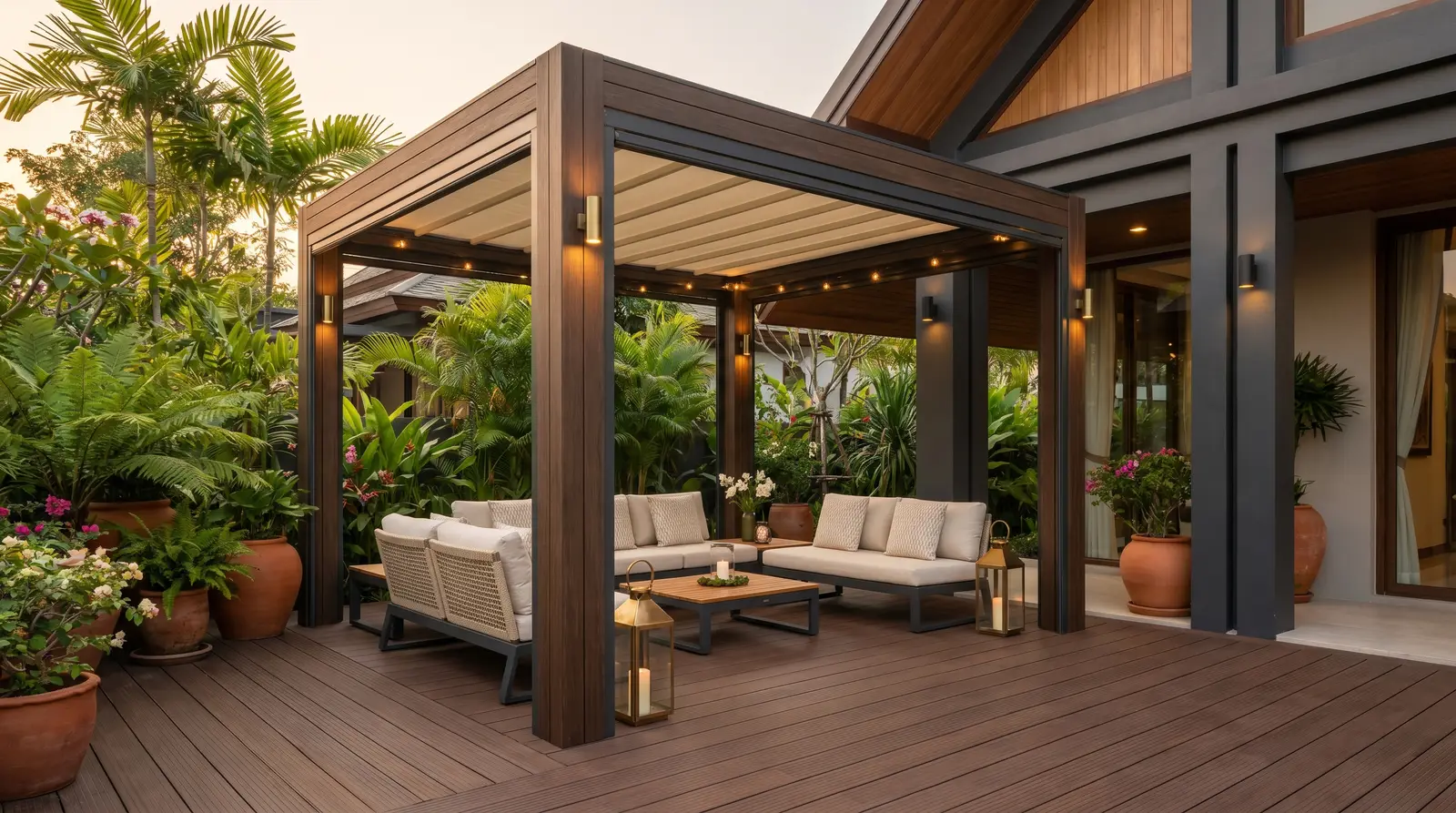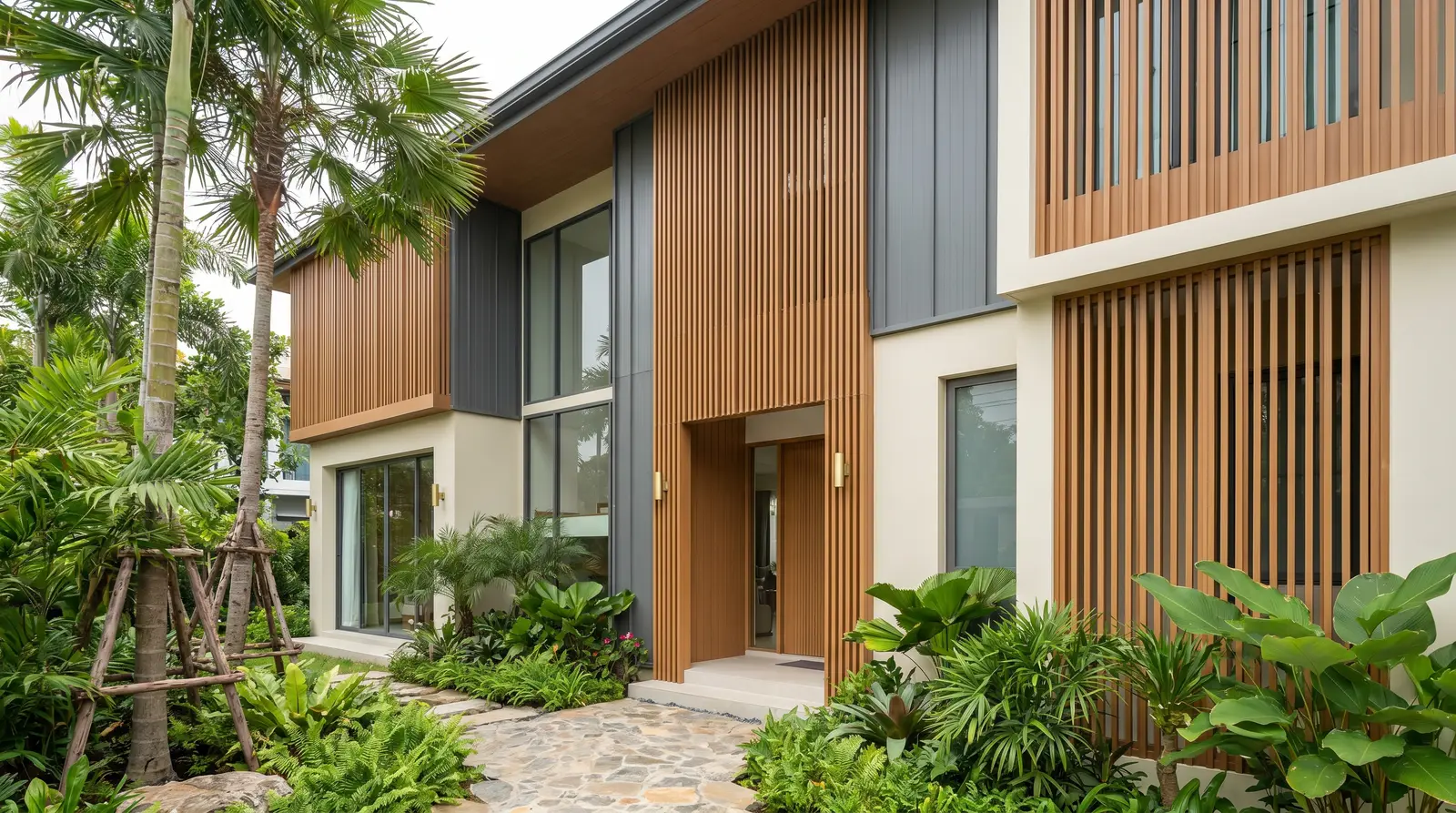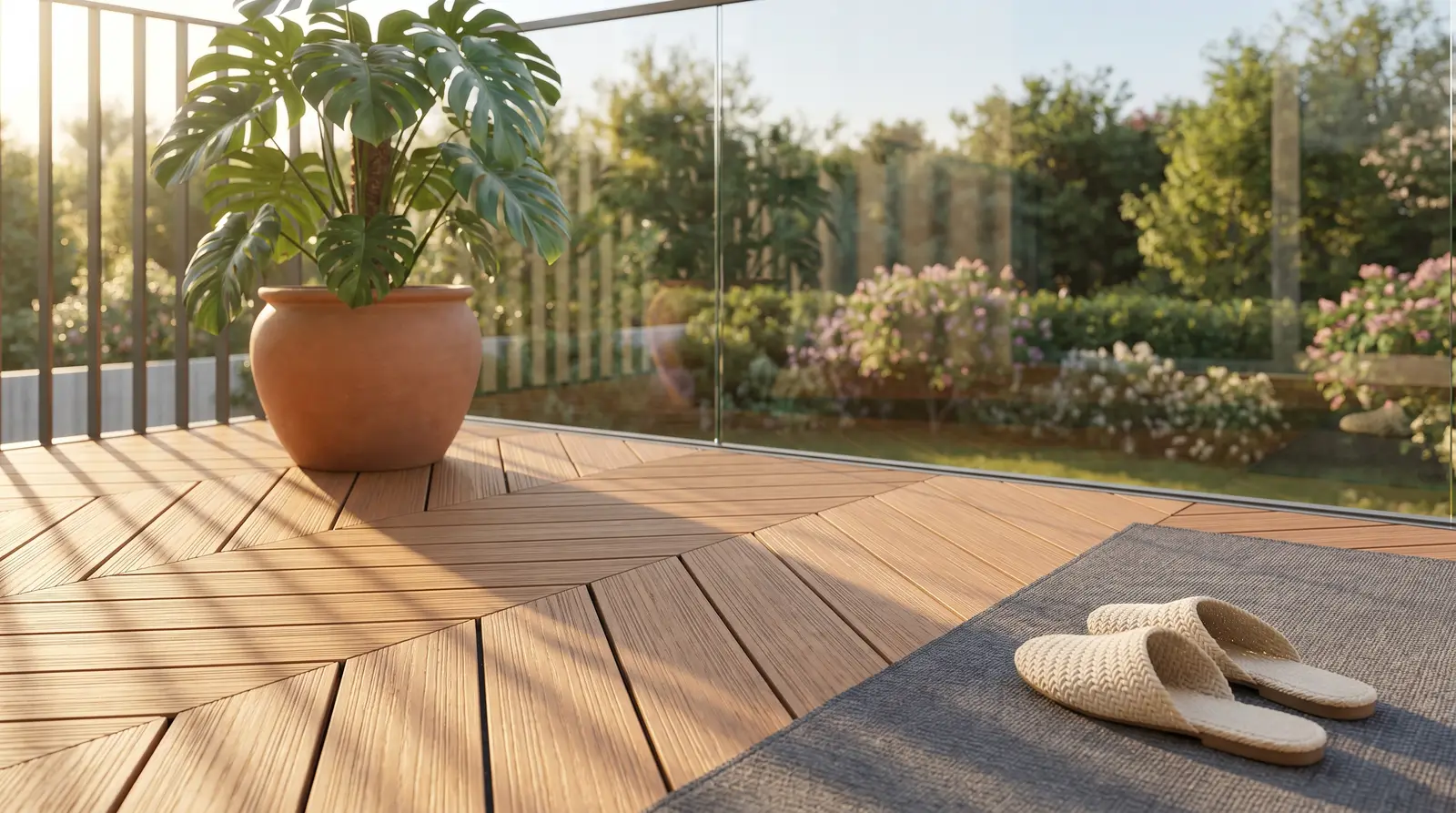
WPC decking is a popular choice for balconies, poolsides, gardens and other outdoor areas because it gives you the look and feel of real timber while resisting water, sun, rot, swelling and termites. Each board is made from wood fibre blended with PVC, usually with a grooved or embossed surface for slip resistance so it stays comfortable underfoot even when wet. This guide covers the benefits of WPC decking and what you should know before you lay it: the joist sub-frame and drainage gap, expansion gaps, choosing colour and texture, maintenance, cost factors and the common mistakes to avoid — so you can plan your balcony decking with confidence and enjoy it for years.
What WPC decking is and where it suits
WPC decking is a board made from wood fibre blended with PVC, engineered specifically for outdoor use. It suits balconies, rooftops, garden walkways, poolside areas and pavilions because it handles sun and rain and does not absorb much water, so it will not swell or rot like real timber. You get the warm look of wood with far easier upkeep.
The main benefits of WPC decking
The standout features are that it is waterproof, will not swell or rot, and termites and borers cannot eat it. Grooved or embossed surfaces add slip resistance even when wet, making it well suited to poolsides and rain-exposed balconies. There is no need to repaint or re-oil as with real wood, colour holds well in UV-stabilised grades, and it feels warmer underfoot than tile on cool days.
A good joist sub-frame and drainage gap
Durable WPC decking needs a strong, level sub-frame. Galvanised steel joists or moisture-resistant bearers are popular, with joist spacing matched to board thickness so the deck does not sag. Crucially, leave an air gap beneath the boards and build a slight fall so water drains away rather than pooling underneath — this prevents trapped moisture and algae growth.
Leaving expansion gaps
WPC expands and contracts with temperature, so leave gaps between boards and at wall edges as the manufacturer specifies. Lay boards too tightly and they can push against each other and buckle in strong sun. The gaps also help surface water drain faster. Use clip systems or standard spacers to keep the gaps even and neat.
Choosing colour and texture
WPC decking comes in shades from light wood tones to deep browns; pick one that works with your walls, fence and outdoor furniture. Lighter tones reflect heat better and stay cooler underfoot than dark tones in strong sun. For texture, deeper grooved finishes add grip and hide marks well, ideal for high-traffic areas and poolside decks.
Maintenance and common mistakes
Maintenance is simple: sweep and rinse with plain water or mild soapy water, and avoid stiff wire brushes that scratch the surface. Common mistakes include laying boards with no expansion gap, skipping the drainage gap beneath the deck, using rot-prone timber joists, or choosing boards too thin for the joist spacing — all of which cause sagging and pooling. Planning it right from the start is key to a long lifespan.