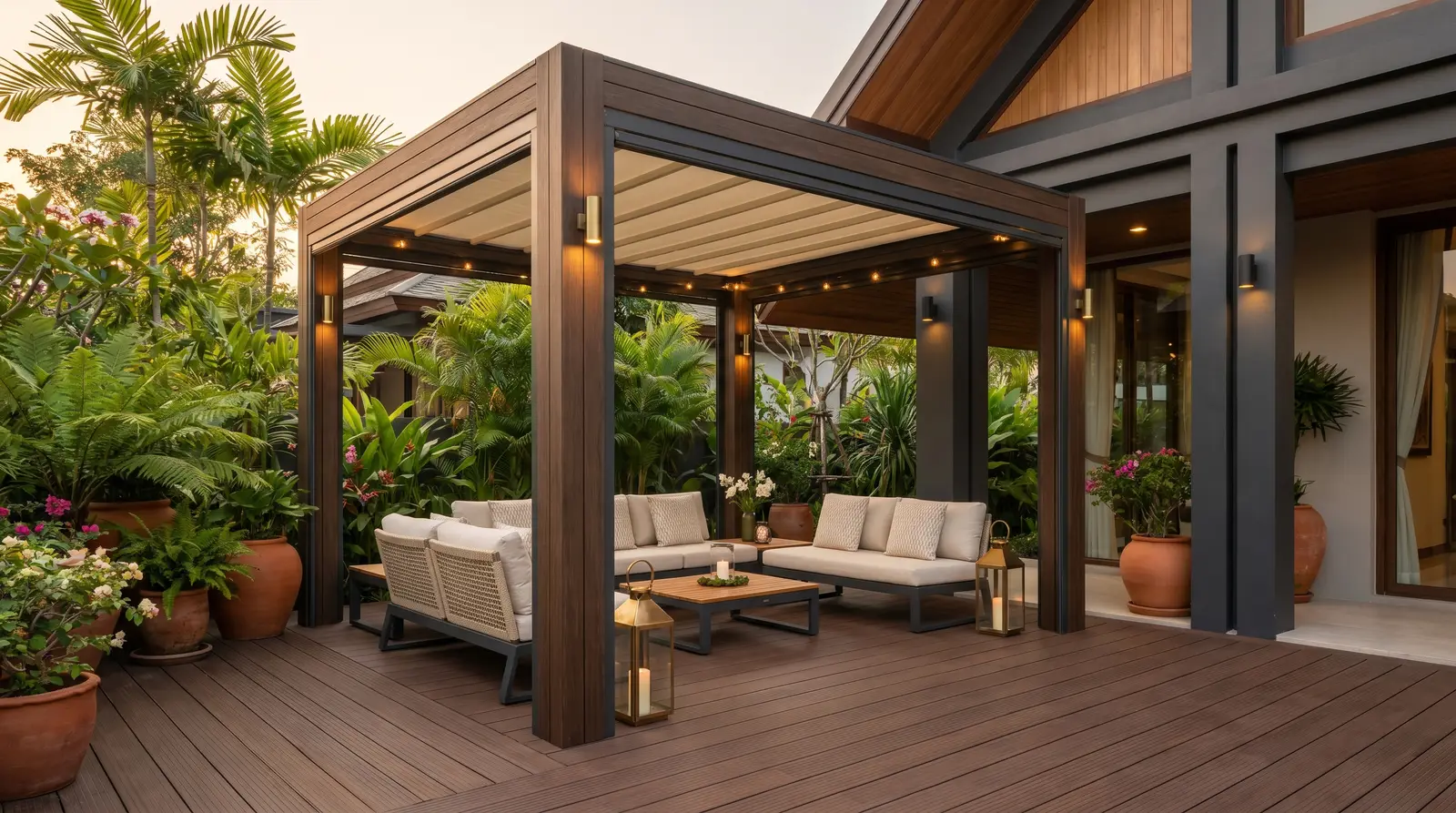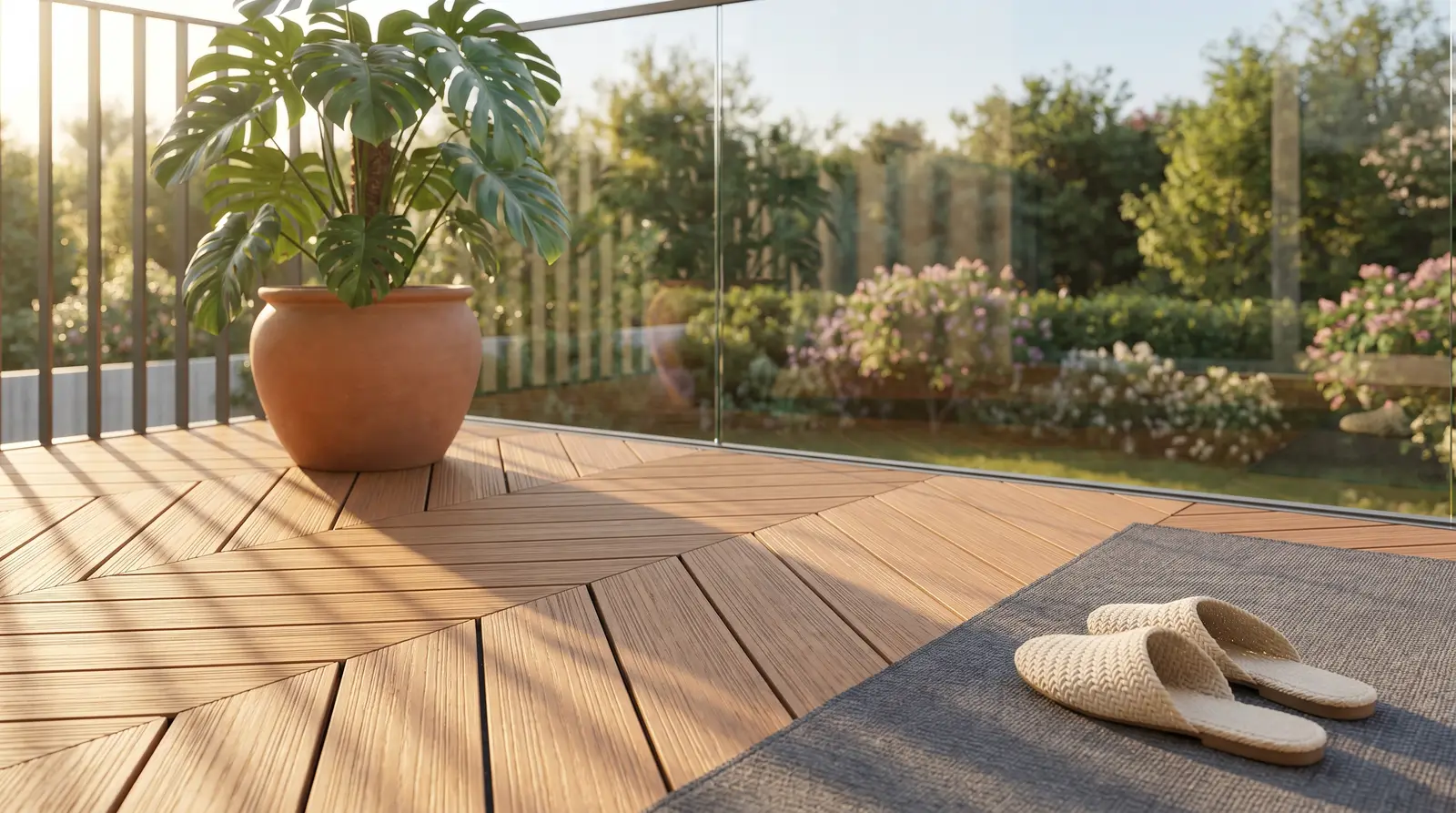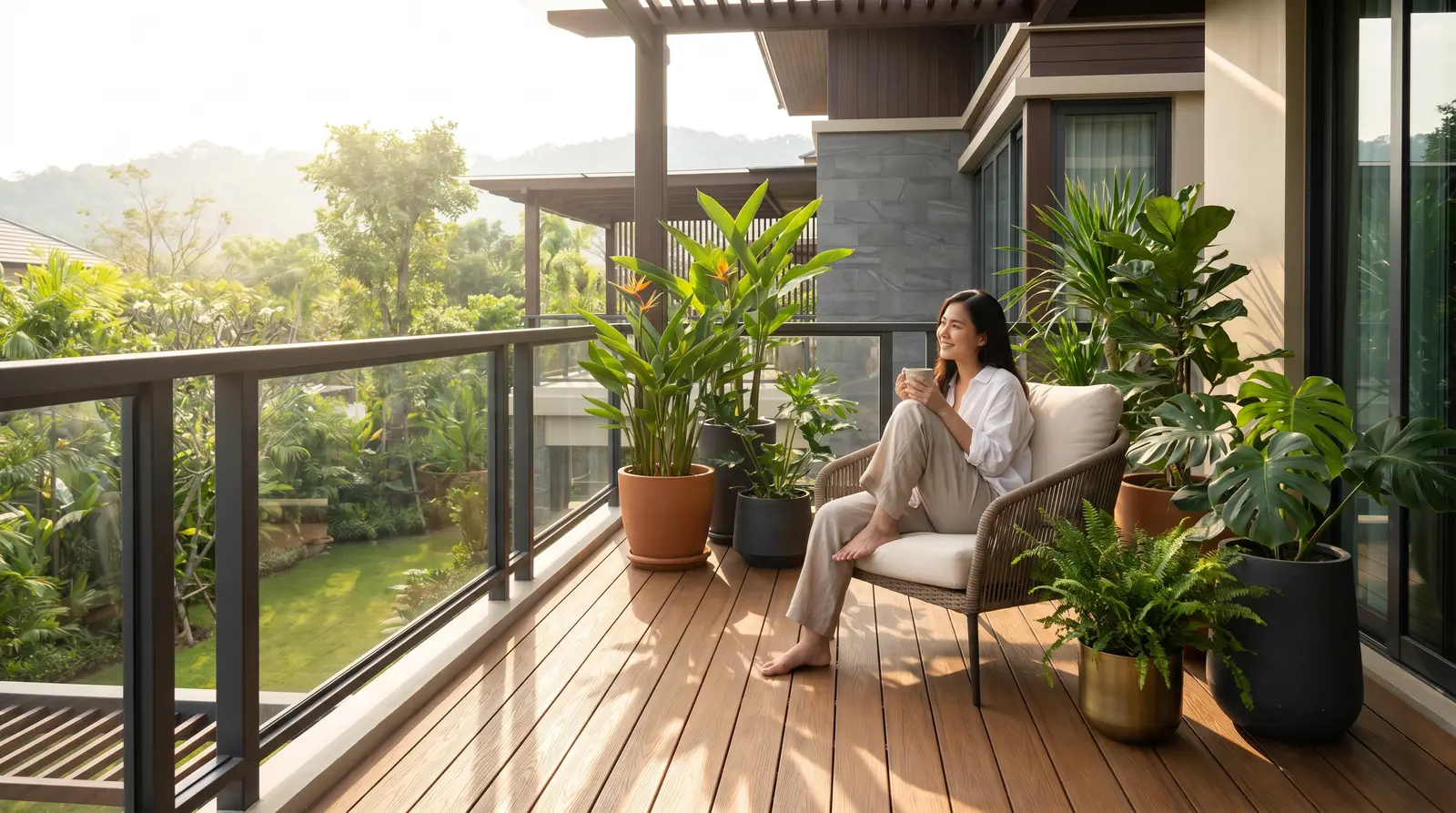
“What does composite decking cost per square metre?” is the first question almost everyone asks. There is no single number, because the rate bundles boards, sub-frame, fixings, labour and any preparation of the existing surface. This guide breaks the price into its parts, shows what can double it, and lists what to check in a quotation before you sign.
What the per-square-metre rate contains
Five parts: WPC boards, the sub-frame (box steel or aluminium joists), fixings (clips or stainless screws), installation labour, and preparation such as levelling or drainage. People compare board prices alone and get a shock at quotation stage, because the frame and preparation are a significant share of the total.
How board grade changes the price
Boards come solid or hollow. Solid boards are heavier and stronger — better for busy areas or heavy furniture — while hollow boards are lighter and cheaper. The other variable is the surface: plain grooved boards versus co-extruded capped boards that resist scratching and fading far better. The gap can be tens of percent, so ask exactly which product and thickness is quoted.
The sub-frame — the most overlooked cost
Outdoor decking always needs a raised frame so water drains and air moves underneath. Galvanised box steel costs more than painted steel but is worth it in humid or coastal locations like Chonburi. Standard joist spacing is 30–40 cm; a quote with wider spacing will usually feel bouncy within a few years.
What pushes the rate up
Small areas cost more per square metre because transport and minimum labour are fixed. Columns, angles and curved edges waste material. Removing an old surface or adding drainage adds cost. Poolside decks run higher again because of premium corrosion-resistant fixings and detailed edge work.
Reading a quotation properly
A good quotation states the board model and thickness, the frame type and joist spacing, the fixing system, the measured area, the schedule and the warranty. If it says “includes preparation as per site condition”, ask exactly how far that goes — that clause is where mid-job extras usually appear.
Value against other materials
On upfront price, wood-look tiles are cheaper. On barefoot comfort, heat build-up and long-term repairs, composite usually wins outdoors. Real timber looks better still but needs annual sanding and re-oiling; over ten years composite is normally clearly cheaper.