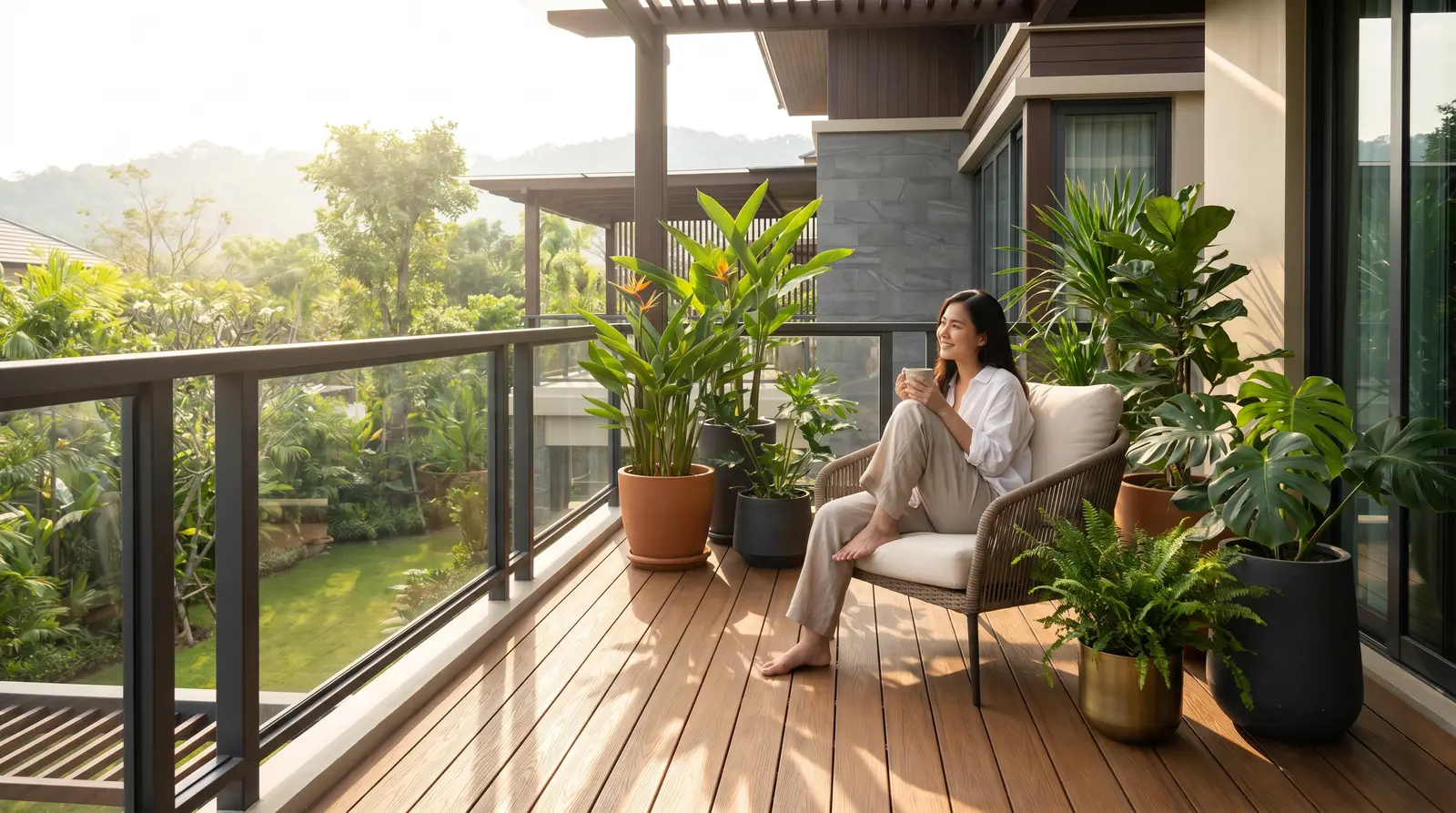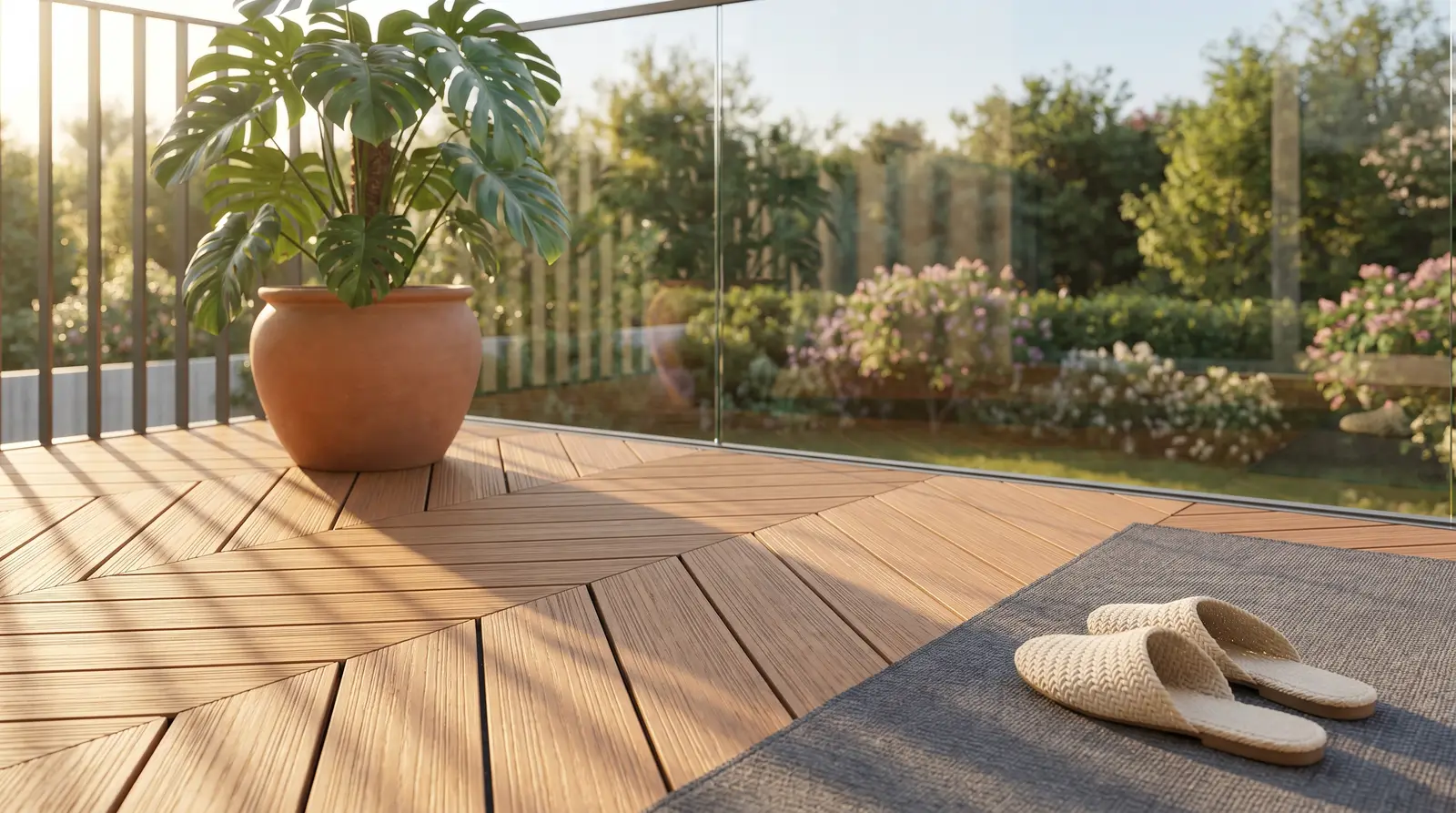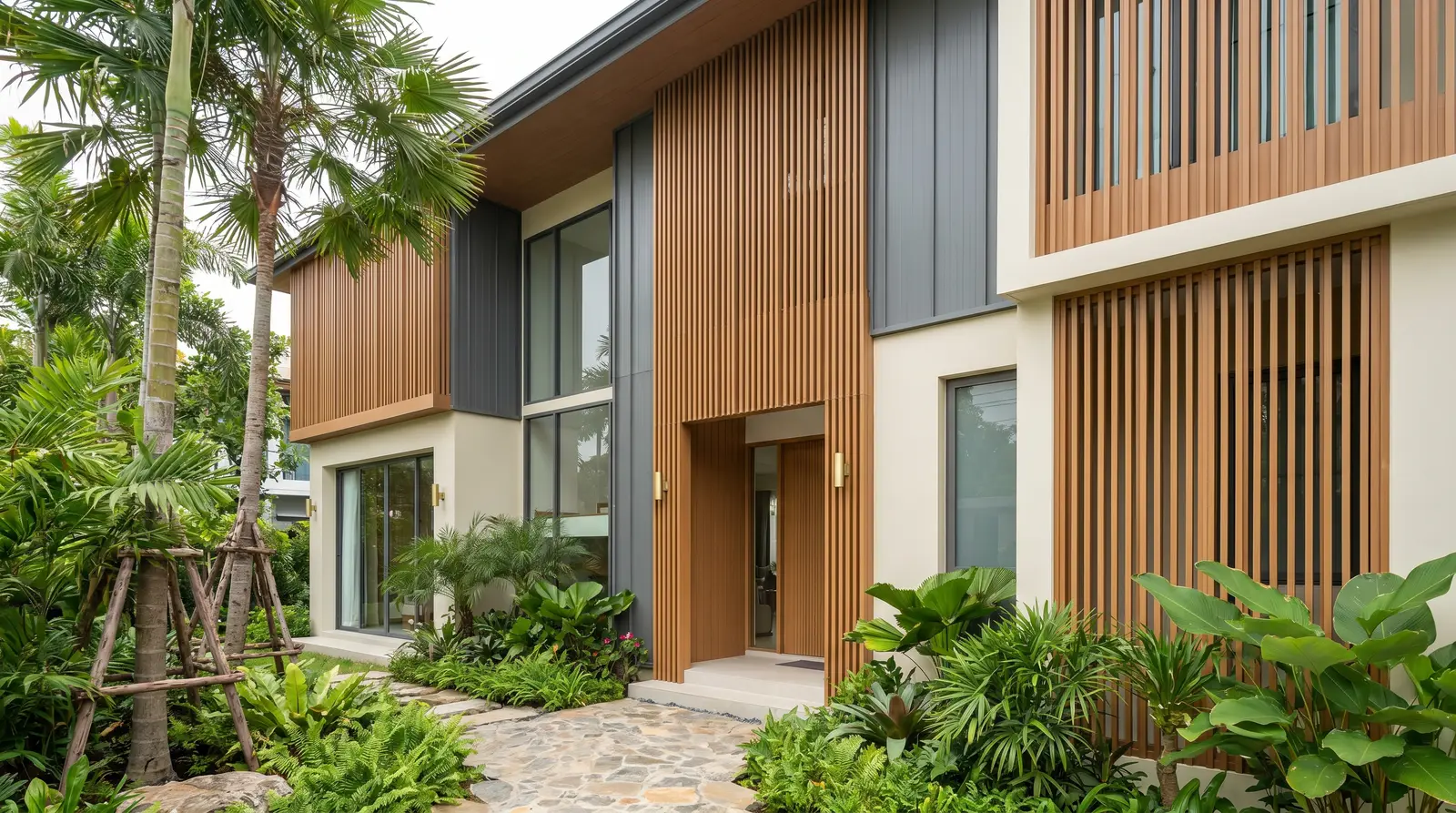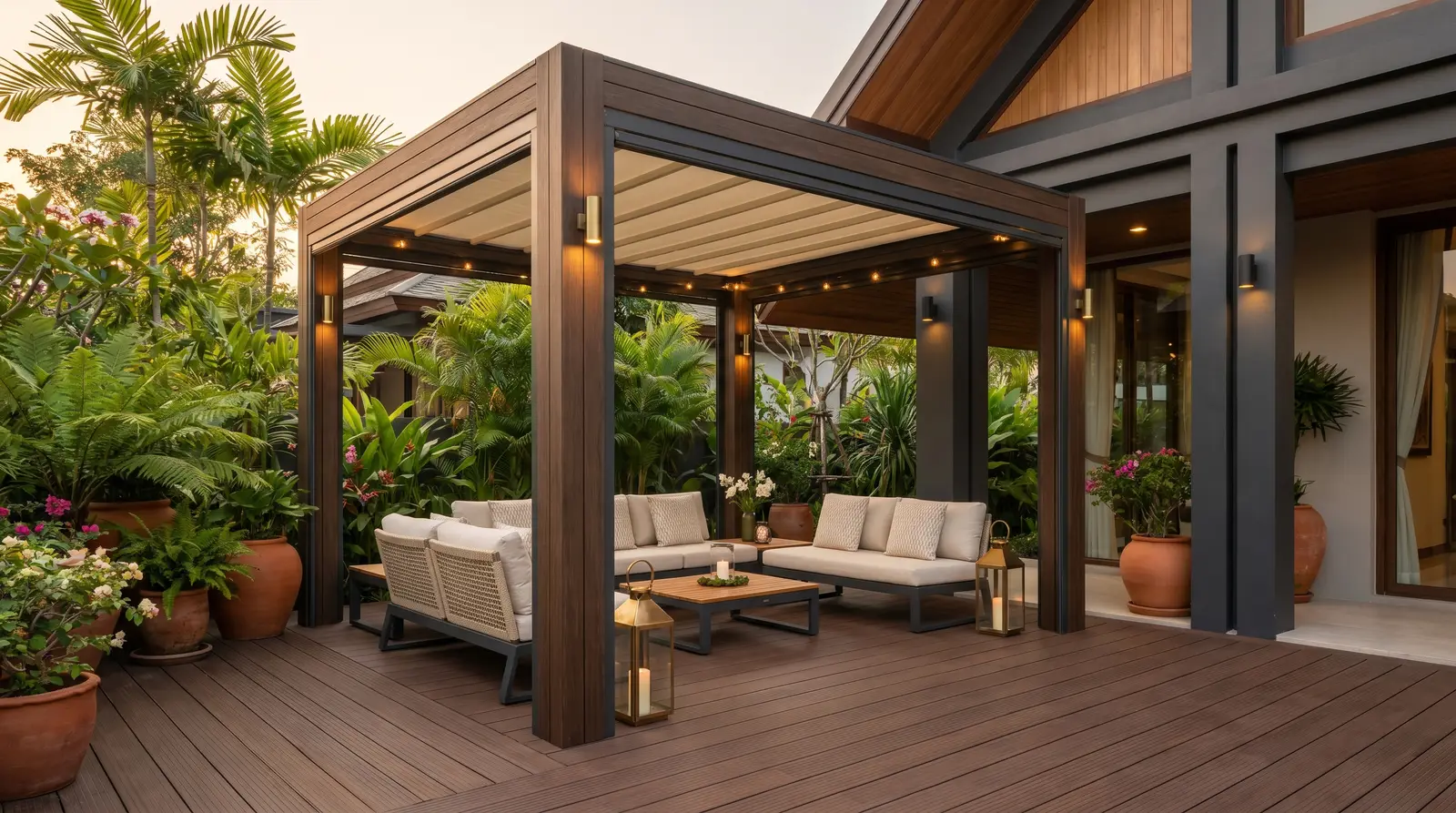
Before laying a balcony or outdoor floor, almost every household weighs composite decking against real timber. Timber can cost less on day one but keeps costing every year; composite is a bigger single outlay with almost no upkeep. This comparison covers heat, slip resistance, lifespan, repairs and ten-year total cost so you can match the material to how you actually use the space.
Standing up to Thai sun and rain
Thailand alternates hard sun and heavy rain. Timber absorbs water and swells, then shrinks in the sun, which brings checking and warping over time. WPC absorbs very little water, so it does not swell or rot and termites ignore it — though expect a slight shade change in the first year before the colour settles.
Heat underfoot
Timber has a small edge here: it stores less heat. Dark composite in full afternoon sun runs hotter. The practical fixes are a lighter tone, a capped surface, and shade — an awning or sun-shading screen over the area you actually use does more than switching material.
Slip resistance and safety
Grooved or brushed composite grips well when wet, which is why it is popular around pools. Lacquered timber tends to be slipperier when wet and needs periodic re-sanding. With children or older residents, check the surface pattern and run the grooves across the main walking direction.
Annual care and repairs
Timber needs sanding and re-oiling every one to two years — labour and downtime. Composite needs a wash once or twice a year. Both allow single-board replacement; clip-fixed systems are far easier to lift than screwed ones.
Ten-year total cost
Add installation to annual upkeep multiplied by the years. Mid-grade timber usually overtakes composite on total cost within a few years, unless you are using a genuinely durable hardwood. If you want a floor you can install and forget, composite wins; if you love the character of real wood and accept the maintenance, timber still has a place.
Which surface for which area
Open balconies, poolsides, garden paths and exposed roof decks suit WPC. Fully covered areas where you want real timber underfoot can still take wood. Many homes mix the two — composite outside, timber under cover — which balances looks and value.